Author: Mindquest

  • 10 of the Best Software Developers in the UK to Follow Online

    10 of the Best Software Developers in the UK to Follow Online

    Looking for career inspiration and software development tips? If you are into software development and happen to be based somewhere in the UK, here are 10 of the best developers in the UK you should be following online (they are, of course, also worth a follow if you are based elsewhere).

    Discover our article: What Makes a Successful Web Dev

    10 of the Best Software Developers in the UK to Follow Online

    As the IT environment is constantly evolving, it is crucial, if not necessary, to connect with the brightest minds to keep up with innovation. In other words, the more contacts you get, the more likely you are to solve IT challenges. Therefore, we at Mindquest are pleased to provide you with a list of the software developers in the uk to follow.

    Marco Gomez

    Website | Twitter 

    Let’s start with Marco, a Leeds-based senior software developer specialising in front-end development. He has also received the 2020 Awwwards Honors and the 2020 CSSDA UI Design Award, among others. 

    Peter Fisher 

    Website | Twitter 

    Secondly, Peter is a Gloucestershire-based MBCS freelance web developer and consultant at Websomatic. He also teaches programming and is the host of How to Code Well.  

    Lorna Mitchell 

    Website | Twitter 

    Lorna then, is a Huddersfield-based developer advocate for Aiven. She is has authored several books and is a regular conference speaker and also a writer for a number of specialised outlets. 

    Maxime De Greve

    Website | Twitter 

    Maxime is a London-based Belgian designer and developer with 12 years of experience, currently working at Marvel App, a collaborative design platform. 

    Dan Spratling

    Website | Twitter

    Dan is a Bath-based UX Engineer and a freelance Digital Consultant. He is an expert in UX Design, accessibility, strategy and testing. 

    Connecct by Mindquest Newsletter

    Jennifer Openshaw

    GitHub | Twitter 

    Jennifer is a North West-based software engineer at BAE systems. She is a history graduate who turned to coding after a career with the National Trust. 

    Rob Allen

    Website | Twitter 

    Rob is a Worcester-based software consultant and developer concentrating on APIs. He runs Nineteen Feet and contributes to several open-source projects.

    Emma Britnor

    Twitter

    To go on there is Emma, a London-based software engineer at Twitter working with Javascript, React and Gatsby. She is also an instructor at Code First Girls.

    Catalin Pit

    LinkedIn | Twitter 

    Catalin is a London-based technical writer and a developer advocate at Hashnode. He has a YouTube channel, where he discusses tech-related hot topics and offers programming tutorials.

    Jack Domleo

    Website | Twitter

    Last but not least, Jack is a Nottingham-based front-end developer at Mitrefinch. He works with Vue.js and TypeScript primarily, has authored a book about career advancement and writes a blog about tech.

    Do you know of any other software developers in the UK who should also be featured? Shoot us an email.

  • A Ransomware Attack, Self-Taught Robots and Online Abuse: The Week in Tech News

    A Ransomware Attack, Self-Taught Robots and Online Abuse: The Week in Tech News

    In the world of IT, real news can easily get mixed with eye-catching headlines and promotional buzz. From a critical ransomware attack to tackling online abuse: filter out the noise with our selection of the top 3 tech news stories of the week.

    Full podcast episode:

    ? Subscribe to the podcast

    Join our community and find your next job or expert in IT

    Ransomware attack: the new oil disrupting the old one

    One of the most echoed statements about data is that it is the new oil. Regardless of whether you agree or not with this comparison ; you will surely find it ironic to see how much the decryption of data, this “new” oil, can end up affecting the old one. 

    Last Friday, Colonial Pipeline, one of the largest oi pipeline operators in the United States, experienced a ransomware cyberattack that pushed it to shut down its IT systems. Linked to the DarkSide hacking group, the breach happened on the business side of the company’s IT infrastructure but affected its nationwide operations. 

    Although it is thought the motivations behind the attack were economic and not of sabotage, the incident reignites fears of the dangers hackers pose to a country’s critical infrastructure. Oil prices have gone up due to the supply disruption, with people all over the US piling up fuel reserves. The issue might not be fixed until the end of the week.

    ZDNet

    Self-taught robots

    The idea of programming AI systems to teach themselves has been gaining major traction in recent years. Flexible software that is able to learn through experience makes a lot of sense. But our current capabilities in this regard might not be as far-reaching as we think.

    A group of Amsterdam-based researchers built a simple robot and tried to make it learn how to move through trial and error. Made of independent units chained together into a train-like structure ; the robot used a series of inflating pumps to propel itself at a top speed of two millimetres per second. 

    Unfortunately, while the autonomous learning system managed to effectively move, maintain a stable pace and follow a circular track, the robot encountered a few real-world problems that threw all its calculations off. A good reminder of how easily a variable not accounted for can disrupt machine learning algorithms.

    Ars Technica

    Tackling tech-enabled abuse

    The tech boom caused by the pandemic has brought along some troubling side effects. An increase in online abuse is one of them. With the number of tech abuse cases requiring specialised assistance having grown by 97% over the last year.

    All around the world, domestic abusers use both legitimate online tools and so-called stalkware to harass, control and monitor their partners. Suffice it to say, this kind of behaviour usually predates or accompanies other forms of abuse, from physical to psychological. 

    That’s why the Barclays-backed non-profit Refuge has launched a site to help abuse victims protect themselves from tech-enabled domestic abuse. RefugeTechSafety.org has been built with the help of survivors and provides educational and actionable resources in multiple languages. 

    Computer Weekly

    Check out more of our interviews from our podcast episodes.

  • What Makes a Successful Web Dev: Stefan Judis, Front-End Dev Expert

    What Makes a Successful Web Dev: Stefan Judis, Front-End Dev Expert

    What makes a successful web dev? We interview Berlin-based front-end expert Stefan Judis. Stefan works for the content management platform Contentful leading developer relations. Whether it is by tweeting, writing, or streaming, he loves sharing his web development expertise with the broader community. He also helps maintain Tiny helpers and Random MDN.

    ? Subscribe to the podcast

    Let’s start from the beginning. How did you get started in technology?

    I started working in a completely different field after school. I was working as a sound engineer, and I worked in German television. So, what I did for a couple of years was mixing stuff mainly for sports TV shows. But then I figured out that I didn’t want to do that my whole life, that that wasn’t going to fly going forward. So, I thought, well, you’ve been always good with computers.

    Then I started studying here in Berlin, where I learned to program stuff. So, it all began with a little bit of C++ and Java and these kinds of things that you learn at university. Berlin is a very start-up-heavy city, so I landed an internship working with Magento and PHP – not real front-end stuff like we do these days; that was not really a thing yet back then. But yeah, I took my first internship and from then I just jump from company to company and learned that I love the web and love writing and creating content around web technologies.

    What made
    you fall in love with web development?

    I’ve always liked the visual aspect of it. When I started, I was really into the Magento stack and I thought it was kind of cool, but I always liked the whole visual animation part of doing web development. And when I started, it was still the early days. Then, you know, slide up, slide down, fade in, fade out, all of these tiny functions. But II found these incredibly appealing. And then slowly but surely, front-end development became a real thing. Then more complexity got into that, and I was completely hooked by all this new technology that was coming out. Then I found out that building for the web is fun. And since then, I tried to build the best stuff possible.

    Join our community and find your next job in IT

    What
    was the hardest part of your transition into tech?

    Well, especially in web development, learning is difficult. I have been doing web dev for 10 years, and when I started, I was incredibly impressed with what people were doing there. So, I remember I was sitting next to a colleague, and they opened their terminal, and they were doing some fancy stuff in this black window and I was like, “holy moly this is a completely different world.”

    I think it was rather challenging to figure out what exactly I had to know. What should I know how to do? But also building a career around that. I think it’s also important to figure out what you actually like.

    So, even though now I say that I specialise in front-end technologies, that took me quite a while. Then, I would say that it took me two or three years to figure it out and get a clearer picture of what is actually out there. And it’s only getting worse, especially in the front-end sphere, because there’s just so much technology out there. A lot of people keep asking me: “Hey Stefan, what should I learn?” And I’m like, “well, good luck figuring that one out.” So, I think that is definitely a challenge that we have at the individual level, but also at the industry level, because there’s just so much stuff happening these days.

    Given
    how many open fronts there are these days, what would you recommend to those who
    don’t know what to focus on?

    For people
    who are just entering the industry: do whatever is fun and useful, really,
    because there’s so much stuff to learn and it feels very, very overwhelming.
    Build your website, get it off the ground and do whatever is fun and useful.
    But what I usually recommend to people is: don’t forget to be curious about the
    technology when doing so.

    Connect by Mindquest - Newsletter

    What we see
    right now is that there are a lot of people just learning a framework when they
    enter the industry. And, while that is great to get a product off the ground, I
    think it’s very important to understand what is actually going on. I’m a big
    fan of the pillars of the web, HTML, CSS and JavaScript, and I think it’s still
    important to have a very good fundamental knowledge of these technologies. And
    these are huge areas by themselves. You cannot be an expert in all three areas,
    especially when you have frameworks on top and that and maybe something on top
    of the frameworks. But I think curiosity and having this drive to say: “Ok, I’m
    using that. But how does it actually work?” — I think that’s very important to
    become a good web developer.

    In your experience, what separates a good web dev from a great one? Is it soft skills, or is it more about hard skills? What make a successful web dev?

    I think
    there are two areas. Soft skills are usually a very underrated thing when we
    speak about software developers. Being a team player in general, I think this
    is definitely a crucial part of a solid career. Being humble, being helpful,
    all the kinds of things that make you a good team player. That’s something, for
    example, that probably should have been taught at university when I studied. Good
    or great teams or developers really depend on soft skills. And I would love to
    have the industry focus a little bit more around that.

    And speaking from the technology side of things, I think a great web developer is someone who always puts the user first. What happens in web development right now is that we have a lot of technology fatigue. We’re using the latest and greatest just because it is the latest and greatest or just because everybody is doing it. So, what I see very often are overengineered sites and products where something simpler would have done the job.

    There’s nothing wrong with building something with the latest and greatest when you’re playing around and you’re building your own blog. But when you’re building a commercial product, I think it’s very important to take a step back and think: “Hey, did that make the whole thing slower, or is it now more inaccessible or is it less robust just because we wanted to use the latest and greatest technology?” I think great developers keep the bigger picture in mind and think about the user to build the best possible product. Because at the end of the day, that’s what we’re paid for. We’re not paid for playing with tech. We are paid for building something great.

    What would you say are the top three soft skills a successful web dev should have?

    I would say
    it’s the usual things, from being helpful to being humble. Putting yourself
    into the shoes of your colleagues and customers, I think that is a very
    underrated skill. Very often it always feels like everything is on fire and
    everybody wants something. But very often, and I’m guilty of that myself, it’s
    necessary to take a deep breath and think about where the other person is
    coming from. I think this is very valuable when it comes to building a career
    or working together in teams.

    One piece
    of advice that I received a few years ago and that I now keep close to my heart
    is that when you’re working it can get quite stressful, always under pressure.
    And very often, what happened to me is that I had this kind of “anti-” mode. I
    was like, “everything is too much.” And I just ranted a lot to other people.
    And I once ranted in a situation where the person was in front of me. They went
    like: “Stefan, I feel you, I empathise with you, but what’s the solution?” And
    I didn’t have one. I just wanted to rant.

    Since then,
    when I really had the feeling that something had to change or something was really
    going on with my nerves. Try to think about the solution first and then propose
    that to colleagues, your bosses, your mates or whoever is around you, because
    very often ranting doesn’t solve the problem. And it’s very easy to rant
    instead of changing something. And that’s something that I learned and that I
    have kept with me for a couple of years now. And it’s definitely helpful.

    Check out more of our interviews from our podcast episodes.

    Follow Stefan through his blog, Twitter, GitHub, and LinkedIn.

  • The IT Jobs Market of Today

    The IT Jobs Market of Today

    In the ultra-competitive IT jobs market, finding the right IT job is not as straightforward as one would wish. Things move fast, with top skills and technologies changing every few months and a constant stream of qualified IT candidates making it difficult to secure the best jobs out there.

    But today’s complex environment is also one ripe with opportunities. Understanding how it works will help you achieve both your professional and personal goals.

    Also, need advice on how to start or develop your freelance consulting business in tech or IT? Need to start a new permanent or freelance assignment? Join Mindquest and get support from our team of experts.

    The growing IT talent gap

    Technological advancement has its adverse consequences – skill obsolescence is a well-known side effect of progress. However, with new technologies emerging at a growing pace and changing the way businesses operate, the IT talent skills gap is rapidly widening.

    Not surprisingly, most recruiters cite skills shortage as their top challenge. The lack of qualified candidates drives salaries up and empowers those professionals who possess the most desired skills. These candidates become increasingly hard to attract and retain, which, in turn, perpetuates the vicious cycle. That’s good news for tech experts.

    The Top IT Skills to Master in 2024

    Remaining competitive in the IT jobs market

    Ironically, the same evolutionary speed that often makes IT professionals so valuable and sought-after can be their downfall if nothing is done in response. More so than in other professions, technology experts have the implicit duty to constantly renew themselves in order to remain competitive and grow their careers.

    Connect by Mindquest Newsletter

    Emerging skills and niches

    New technological and business breakthroughs are constantly updating the list of most desired skills and capabilities. While softer skills like communication and time management are life-long partners of success; technical knowledge needs to be periodically revisited and updated to keep up with enterprise trends. The rise of data science, the AI boom and the strong momentum of cloud computing are all setting the agenda for the most in-demand IT skills.

    In addition, the pandemic has put the focus on business-related skills. With companies increasingly looking to hire IT professionals who also understand the business side of things and can coordinate better with the rest of the organisation.

    The change of focus makes sense. As higher-level business and management skills can help a great deal in navigating change and identifying new opportunities. For IT professionals and technical profiles, making a lateral career move to become more business-savvy can prove very beneficial.

    Need tips on how to find a job in IT? Check out our IT job hunting guide.

  • AI, IBM Chips, and a Novel Cloud Security Concept: The Week in Tech News

    AI, IBM Chips, and a Novel Cloud Security Concept: The Week in Tech News

    In the world of IT, real news can easily get mixed with eye-catching headlines and promotional buzz. From AI and chips to cloud security: filter out the noise with our selection of the top 3 tech news stories of the week.

    Full podcast episode:

    ? Subscribe to the podcast

    AI is everywhere

    The AI hype is so strong we often forget that
    artificial intelligence is already an integral part of our everyday
    lives. 

    Firstly, AI played a key role in the development of Covid-19 vaccines. But there are many other, less conspicuous ways we benefit from it directly. 

    For example, from anti-spam email filters to fraud detection for your banking account, silent, tiny AI helpers accompany us throughout the day without us necessarily being aware. Whether it is by dimming our phone’s screen brightness or suggesting sentences we tend to use, low-level AI tools do exactly what the best kind of technology does: help out without being noticed. 

    But not everything’s about the little things, other common applications have positive effects on our society, like smart city traffic management or energy grid optimisation. 

    World Economic Forum 

    IBM makes chip breakthrough

    For all its innovation potential, the
    technology industry still has an over-reliance on the diminishing effects of
    the long/established Moore’s Law, by which the number of transistors in
    computer chips tends to double in number and halve in size every two years. 

    Unfortunately,
    recent years have seen this rule of thumb falter, with chip manufacturers
    struggling to keep the good ratio going.  

    Enter IBM. The company announced this week a significant breakthrough in the way computer processors can be effectively made. IBM created a 2nm chip it claims can boost performance by 45% over 7nm chips while cutting down energy consumption by 75%.

    BBC

    A scalable approach to cloud security

    Making sure that evolving cloud environments remain protected against malware is becoming increasingly difficult in a world where multi-cloud is the new norm and a single weakness can compromise an entire network

    As if
    human fallibility and the cloud’s sheer size were not enough, attackers are
    using increasingly sophisticated methods of bypassing traditional security
    measures and protocols.

    Malware is often only valuable until its detected, as its signature can then be easily identified by the system. Yet, scanning an entire cloud ecosystem for irregularities still involves too much complexity and resources due to its sheer size. 

    A research initiative by Microsoft’s, Projet Freta, proposes a novel approach: a cloud-centric in-memory scanning system that focuses on virtual machine instances to deliver scalable protection.

    TechRepublic

    Connect by Mindquest Newsletter

    Check out more of our interviews from our podcast episodes.

    Join our community and find your next job or expert in IT

  • IT Business Analyst : Job Description

    IT Business Analyst : Job Description

    Use our template to create a compelling and comprehensive IT Business Analyst job description to attract top talent.

    The role of the IT Business Analyst aims to bridge the gap between the various operational departments and the IT department. Their main mission? To ensure the alignment of a company’s IT systems and its strategic business objectives. They are in charge of analysing business needs and translating them into technical objectives.

    The main difference between a classic Business Analyst and an IT Business Analyst is that the latter does not delegate the operational part of the project.

    Interested in exploring more roles within tech? Take a look at the role of the Salesforce Consultant

    IT Business Analyst: the job

    Identify IT issues

    Firstly, the IT Business Analyst will identify all sources of wasted time, energy or money within the company’s IT systems. They will therefore start by analysing all processes, tools and uses to identify areas for improvement.

    Develop a strategy

    After carrying out their analysis, the IT analyst expert will then define an action plan and lay the foundations for the project. The goal of the project may be, for example, to improve production, sales, customer relationship management, information flow or even logistics. Their field of action is therefore extremely wide.

    Implement the strategy

    Unlike the classic Business Analyst, they will be in charge of the project through its operational part. That is to say, after having defined the strategy, they will be in contact with the development teams to directly manage the implementation of new IT systems or the optimisation of existing ones.

    Also read the differences between Big Data and Business Intelligence

    Required Skills of the IT Business Analyst

    Analysis and decision making

    In order to develop the best possible strategy, the IT Business Analyst must analyse IT systems down to the smallest detail and determine how they can be improved. In some cases, they must consider if it’s worth it to replace the entire existing system.

    Ability to adapt

    Moreover, an IT Business Analysis consultant may be required to work in various industries. They must quickly become acquainted with the market, the operations of the company, and the computer systems it uses. They must have technical knowledge of these systems, but they must also understand how teams use them.

    Technical and strategic monitoring

    To develop the best possible strategies, they must also be constantly informed of new developments concerning IT systems, computing and business.

    Mastery of programming language

    In addition, As part of the development team, they often have to master programming languages ​​like SQL, Java, NET, C ++, Python …

    Also discover the other Project Managements roles and career paths

    The IT Business Analyst within the industry

    The analyst can work in any industry and within various companies as long as the information system and organisation are large enough.

    Salary of the IT Business Analyst

    The average daily rate is between €400 and €700, depending on experience and the type of profile.

    Training and education

    To access this profession, it is recommended to have a relevant university degree. A master’s degree in Economics / Business / Management or in Computer Sciences is a big plus.

  • From Mastering SAP to Controlling Cars with a Phone: Interview with Denise Nepraunig, iOS Dev

    From Mastering SAP to Controlling Cars with a Phone: Interview with Denise Nepraunig, iOS Dev

    Interview with Denise Nepraunig, a Berlin-based iOS developer who decided to pursue her passion for Apple after 13 years in the SAP ecosystem. She’s now a Swift and iOS dev at CARIAD, the Volkswagen Group’s automotive software development division. This is what she did, why she did it, and how you can do it too.

    ? Subscribe to the podcast

    Interview with Denise Nepraunig

    You worked with SAP for many years. Why the change in
    career focus?

    I started out within the SAP ecosystem about 13 years ago, working for an SAP customer, then I had a short stop at an SAP consultancy and, finally, I ended up at SAP itself. The thing was that SAP is really great to work with, and it also pays very well to have SAP skills. But they are really specialised, so it can be hard to transfer them to another company or environment. It’s also hard in terms of resources. Then. things like blog posts or stack overflow questions, they are hard to get by.

    Plus, after doing SAP stuff for so long, I really wanted to break free from all of it and diversify my skillset so that I could work anywhere. The last two or three years at the company, I had the chance to get started with some iOS development, and I found it really exciting, I loved it.

    So, I’m an Apple fangirl, and I thought writing your own apps for the platform was really cool. Swift makes it a lot easier than Objective-C, with which I had failed in the past. But at SAP we were still using our own frameworks within iOS and stuff like that, so I felt a bit stuck inside this ecosystem.

    Then I had the opportunity to interview at Volkswagen, and I saw that they hadn’t created too much stuff for iOS yet. And It was a really good opportunity for me. I joined last December, so I’m a few months in. To be honest, it was quite scary to leave my extensive SAP experience and network behind, but so far I don’t regret it a single bit.

    Now I am working on apps with which you can remotely control car features
    like climatization. It’s also really fascinating to have hardware involved. At
    SAP you just controlled software or business processes and now you can control a
    car. It’s like being a kid with a remote-controlled car, but with a real car
    instead.

    So, you basically went from writing code for B2B
    applications to doing it in the B2C space? What are the biggest differences you
    have noticed?

    For one thing, and in my case, you’re much more closely connected to the
    customer, and your sprint and your tasks inside the sprint can change very
    quickly depending on what problems arise or the feedback on the App Store.

    Also, I feel more connected to my work. You directly know the end-users, everybody in your everyday life has experience with cars, but hardly anyone else has experience with ERP systems. Volkswagen also has a lot more customers. It has a whole different scale than SAP. Some projects I worked on, yeah – it’s really exciting. I was looking exactly for this.

    What’s the best career advice you have ever been
    given?

    The best piece of advice has definitely been that I should network a lot.
    And that was really important when joining a
    big company like SAP. There are just so many different things which you are
    dependent on, whether it is a cloud platform, or a web framework, or stuff
    inside SAP itself… You need to know people, and it helps tremendously if you
    know the right person. And that’s also true in terms of careers. For example, if
    you know someone in another department, you can easily get a job there just
    because you know the person.

    Connect to Mindquest newsletter

    There are also some cool events
    that SAP had, where I got the chance to be a speaker at and so on. So this was
    a tremendous experience inside the SAP family. My first manager at SAP actively
    supported me in this process, encouraging me to travel to conferences and speak
    there. I had the opportunity to travel to different countries and experience different
    cultures.

    What’s the
    biggest challenge you have faced in your career?

    Before I was in the IT
    business, I was a secretary. I had no formal IT education and was coding as a
    hobby. I used automation in Microsoft Excel a lot and very basic stuff like
    that, and it made me decide I wanted to be a developer.

    But trying to get the
    right education and my first job without having any experience was very, very hard.
    It was the biggest challenge, and overcoming it involved a bit of luck too. I heard
    about a job from a former university professor of mine. It was SAP-related, but
    not in development. I was first a project assistant and then kind of worked my
    way up to developer. I knew I had to do other stuff to end up where I wanted. I
    had also studied communications engineering, so I had all those skills in my CV
    already. But work experience is so important in this field, and getting the
    first job was super hard.

    Is that
    something you would recommend to newcomers who are struggling to get into the
    field, starting with something related and moving up?

    Yeah, I think so. You can
    do this in a big company in particular, but also in small companies. There one
    wears many hats, and it’s also easier to look over the shoulder of other people,
    because it’s smaller. I think that, if you can’t directly get a developer job,
    try to sneak in through somewhere and work your way up.

    Hos was your particular
    experience in larger companies?

    Well, for me, my
    developer career really took off in terms of knowledge when I joined SAP. Before,
    I worked in teams that were rather small. There were one or two developers who
    most of the time did a plethora of things. So, I was writing code, but I did
    not feel that I was able to get better at it. I wrote the same things, again
    and again.

    But, when you join SAP, there are eight people working on the same problem all together. And a lot of people are smarter than you, obviously. It was the first time I ever heard about unit tests and other things I now take for granted. You don’t do this on your own if you’ve never been exposed to it. So that was tremendously helpful. And, also, in a big company, if something else interests you, it’s easier to move to another department instead of looking for a whole new job entirely. It was really a great experience. I mean, big companies sometimes move slowly and can be frustrating when it comes to some processes, but you learn a lot.

    Check out more of our interviews from our podcast episodes.

    Follow Denise Nepraunig on Twitter, LinkedIn and through her website.

    Also discover ou special guide: The Ultimate S/4HANA Careers Guide

  • Mindquest Welcomes Melchior du Boullay as General Manager to Support its Hypergrowth Ambitions

    Mindquest Welcomes Melchior du Boullay as General Manager to Support its Hypergrowth Ambitions

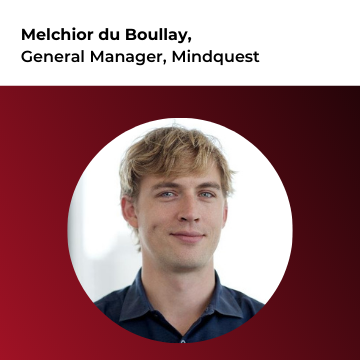
    Mindquest and its parent company Club Freelance are welcoming Melchior du Boullay as the new group General Manager. This entrepreneur, IT specialist, and business development expert is now back in his native France after 14 years in the United States. His mission: to lead the group’s fast-evolving organisational structure and propel its international expansion.

    A new
    structure for new needs

    Above all, the appointment of Melchior du Boullay comes as the recruitment group embarks on an acceleration phase, driven by the strong vision of its founders and materialized by the launch of Mindquest at the start of the year.

    In recent years, IT skills have become much more complex and harder to secure. Consequently of talent shortages, demand has shifted towards a stronger hybridisation of tech roles and careers.

    Discover The Top IT Skills to Master in 2021

    An agile approach to IT recruitment

    By providing both freelancer sourcing services and recruitment on permanent contracts, Mindquest offers an agile approach to IT recruitment that is unique in its sector. This approach meets both the needs of companies to build mixed teams (freelancers and permanent employees) and the desire of talent to break the linearity of their careers based on their evolving life plans.

    Profitable since day one, the Mindquest / Club Freelance group hopes to
    reach 70 million euros in turnover and 100 employees by 2025, compared to 21
    million and 35 employees at present. The ambitious plans include the deployment
    of the group’s services in several European countries: an expansion that will
    now be supported and spearheaded by du Boullay as new General Manager.

    A
    hypergrowth management specialist at the helm

    A graduate of the EPITA, the first Engineering and Computer Science school in France, and endowed with a strong entrepreneurial spirit, Melchior du Boullay has spent his entire career at oXya, a provider of technical services and cloud solutions for SAP customers, now part of the Hitachi group.

    Du Boullay held various positions there: IT consultant deployed at customers, SMBs and large enterprises, then project manager and development manager. His international career took him to Congo, Canada and various other countries. He then settled in the United States, where he has led the American subsidiary of oXya for 14 years and achieved double-digit growth year after year. Nearly 20 years of continued challenges and successful conquest have enabled him to acquire very strong expertise in management, process optimization, and corporate governance.

    The importance of inclusion and diversity

    Close to the field, to his teams, and to his clients, du Boullay has made inclusion and diversity his guiding principles and will be keen to put his passion for people at the service of Mindquest. His transatlantic experience will also be an asset in the context of the group’s international ambitions.

    Mindquest new General Manager Melchior du Boullay will work to take the excellent quality of service that characterises the company into a context of hypergrowth. A phase always difficult to manage.

    “My role will be to structure the organisation in order to realise the
    vision of its leaders. It’s about bringing together and engaging our entire
    ecosystem. It is especially important for me to preserve the values of goodwill
    and high standards that permeate the group and made me want to join this
    adventure. Coming from the IT world myself and having already had to manage
    complex phases of strong growth, I want to support Mindquest in its development
    while keeping its values intact. My goal is to make it grow from a recognised
    player to an undisputed leader both in its original French market and
    internationally, “assures du Boullay.

    For any press inquiries, please contact:

    Sarah Hachemi

    [email protected]

    Antoine Billon

    [email protected]

    ? Subscribe to the podcast

    Join our community and find your next job or expert in IT

  • How the Covid-19 Pandemic is Accelerating the hybridisation of Careers in Tech & IT

    How the Covid-19 Pandemic is Accelerating the hybridisation of Careers in Tech & IT

    The current health and economic crisis is generating profound changes in careers and recruitment within companies. And especially within tech & IT departments. Manuela Delfort-Garampon, co-founder of Mindquest and Club Freelance, sees both a rise in freelancing and a comeback of permanent contracts. Two trends which may seem contradictory but which in reality testify to a convergence of the two forms of employment. The pandemic is causing a hybridisation of tech.

    Originally published on Alliancy.

    Pandemic hybridisation tech – Crisis-proof agility: the confirmation of the freelancing model

    The common denominator in all crises is urgency. With the Covid-19 pandemic, companies have had to reorganise under unprecedented pressure. In this context, many organisations called on freelancers and external experts; a phenomenon far from being new in the IT field. But which has intensified in certain industries essential to business continuity.

    Specifically: the urgent deployment of tools that are essential to the implementation of teleworking has generated a wave of requests for network and support consultants, cloud, VPN, and cybersecurity experts of all kinds. Some IT departments have also resorted to freelancing to compensate for the recruitments that were already planned.

    At the same time, some candidates and IT professionals have made a choice in this period of crisis to turn to freelancing opportunistically. Both to stay active and to position themselves on high added value missions that help companies quickly deploy critical solutions.

    While the flexibility of the freelancing model has long appealed to companies and applicants alike. The agility it provides has made it an obvious solution to the current situation. But that’s not the only trend regarding careers transformation in the tech world.

    Consolidation for tomorrow: the return of the permanent contract

    Beyond the emergency, many companies see the current crisis as an opportunity to get ahead and differentiate themselves. Many paused their recruitment efforts during the first lockdown, but most have resumed – or even accelerated – their search since September.

    Why? Quite simply because in times of crisis, the best talent is more essential than ever in an IT team. Hence the need to attract and retain top performers that sustain strong teams. The war for talent has intensified around these key profiles. Which companies are tearing off and now want to “secure” under permanent contracts.

    At the same time, the permanent contract has made a comeback in the hearts of many candidates and tech & IT professionals; even among some who previously swore only by freelancing. A certain number of freelancers have chosen to go (or go back) to salaried employment, in order to (re) find greater stability in these times of crisis.

    Resorting to the freelance model, although it has grown in importance with the crisis, does not however supplant the permanent contract model. In fact, the two statuses coexist now more than ever.

    IT Job Hunting Done Well: A Step-by-Step Guide

    Pandemic hybridisation tech, towards the end of the silos between statuses?

    In terms of professional careers, the last few decades have seen many silos gradually fall. For a long time, the norm was to do the same job in the same company throughout one’s life. Then careers began to be built across several companies. For the past twenty years or so, it has been common practice to have several different jobs during a professional career, and sometimes to retrain or reskill completely. Today, there is also the alternation and combination of statuses, with an increasingly porous border between permanent contracts and the self-employed status.

    In fact, this trend of hybridising careers in the world of technology and IT did not originate from the pandemic. The motivations for moving from one status to another can be multiple and independent of the current crisis. Example: many freelancers decide to (re) switch to permanent contracts to access management positions. But the current pandemic is greatly accelerating the phenomenon.

    Status doesn’t matter as much as it used to. For companies, the challenge now is to attract the best talent, whether they are on permanent or freelance contracts, to accelerate their IT projects. For professionals open to new opportunities, what matters is more the interest in the project and the technical stack, as well as the dynamics of the team. Status is no longer an end in itself.

    sign up to mission control center

    ? Subscribe to the podcast

    Join our community and find your next job or expert in IT

  • 10 of the Best Cybersecurity Experts in the Netherlands to Follow Online

    10 of the Best Cybersecurity Experts in the Netherlands to Follow Online

    Certainly, information security only keeps gaining importance as more and more business-critical processes move to the cloud and hackers get more sophisticated. For this reason, you should stay up-to-date with best practices, top threats and emerging trends. That is why we at Mindquest suggest you 10 of the best cybersecurity experts in the Netherlands to follow on LinkedIn and Twitter. 

    Also disover our article: 10 of the Best Software Developers in the UK to Follow Online

    10 of the Best Cybersecurity Experts in the Netherlands to Follow Online

    Cybersecurity has become crucial in recent times, especially during the Covid-19 pandemic. As more and more companies had to implement their own virtual work environment, the need for cybersecurity experts grew exponentially. At Mindquest, as IT talents experts, we know the importance of getting the right contact to stay up-to-date and always match the top candidate for the best IT positions.

    Therefore, take note of the 10 best Cybersecurity experts in Netherland to follow online.

    Chantal Stekelenburg 

    LinkedIn | Twitter 

    Firstly, Chantal is head of Hackers at continuous security platform Zerocopter and also a co-founder and organiser of the Netherlands’ Women In Cybersecurity Community Association.  

    Oscar Koeroo 

    LinkedIn | Twitter 

    Oscar is currently leveraging his expertise as a Docent at Security Academy, where he imparts knowledge on Applied Cryptography.  

    Sanne Maasakkers 

    LinkedIn | Twitter 

    Also, Sanne has recently joined Mandiant, now a part of Google Cloud, as a Senior Analyst. In this role, Sanne brings her expertise in cybersecurity to the forefront, contributing to Mandiant’s mission of providing cutting-edge security solutions.

    Astrid Oosenbrug 

    LinkedInTwitter  

    Astrid is currently serving as the Corporate Social Responsibility Officer at ESET Nederland. In this role, she focuses on measuring the impact of the organization’s activities on society and the environment, promoting transparency and ethical behavior to contribute to sustainable development. 

    Floor Terra 

    LinkedIn | Twitter  

    Floor is a senior privacy advisor at data protection services Privacy Company He also specialises in high-impact projects combining technological and organisational solutions. 

    Connect by Mindquest- Newsletter

    Joost Schellevis 

    LinkedIn|Twitter  

    Joost is a tech editor at Dutch news organisation NOS. He writes about security and privacy issues and also reports on the country’s latest cybersecurity news. 

    Marjolijn Bonthuis 

    LinkedIn | Twitter  

    Marjolijn is deputy director at ECP, a public-private platform for the development of the information society. She is also the winner of Women in Cyber Security (WiCS)’s 2016 Woman of the Year Award. 

    Lodewijk van Zwieten 

    LinkedIn | Twitter 

    So, Lodewijk is a senior public prosecutor at the Dutch Public Prosecution Service specialising in combating cybercrime. He is also part of the supervisory board at the DIVD. 

    Anna van der Leeuw 

    LinkedIn | Twitter 

    Then, Anna is a privacy law expert at firm Allen & Overy, where she focuses on European Union regulations around ICT & Telecom, data protection and cybersecurity. 

    Rickey Gevers 

    LinkedIn | Twitter 

    Last but not least, Rickey works as Incident Responder at Responders.NU. Founded with the mission to elevate Incident Response to new heights, the company breaks away from traditional approaches to deliver unparalleled expertise and service.