Category: Tech Magazine

Main category

  • 11 of the Best SAP Experts in Germany to Follow Online

    11 of the Best SAP Experts in Germany to Follow Online

    If you are looking for some of the best SAP specialists in the world, Germany is the place to go. Even if you just go there virtually. Here are 11 of the best SAP experts in Germany you should be following online.

    Need advice on how to start or develop your freelance consulting business in tech or IT? Need to start a new permanent or freelance assignment? Join Mindquest and get support from our team of experts.

    11 of the Best SAP Experts in Germany to follow online:

    As the IT environment is constantly evolving, it is crucial, if not necessary, to connect with the brightest minds to keep up with innovation. In other words, the more contacts you get, the more likely you are to solve IT challenges. Therefore, we at Mindquest are pleased to provide you with a list of the best sap experts in Germany to follow.

    Interested in SAP careers? Learn more from this SAP project management expert.

    Thomas Grassl

    Tomas Grassl SAP Expert

    LinkedIn | X

    Who best to turn to SAP-related advice than the company’s head of community and developer relations? Grassl can help with industry-standard mentorship, tutorials and all things TechEd. 

    Cecilia Huergo

    Cecilia Huergo SAP Expert

    LinkedIn | X

    Then, Cecilia is a Product Manager for the SAP Business Technology Platform (BTP). She recently helped launch The Stack, a monthly Q&A focused on the integration and extension capabilities of SAP BTP.

    Tobias Hofmann

    Tobias Hofmann SAP Expert

    LinkedIn | X

    Tobias is an Expert at DB Systel GmbH . A seasoned SAP mentor alumnus and a dynamic speaker, he specializes in crafting cutting-edge cloud solutions. His expertise spans across SAP, Azure, mobile, Fiori, and SCP platforms.

    Corinna Stein

    Corinna Stein SAP Expert

    LinkedIn | X

    Corinna is a Solution Owner at SAP Extended Warehouse Management (SAP EWM) and SAP Transportation Management (SAP TM). She helps improve retail supply chains with digital logistics.

    Andre Fischer

    Andre Fischer SAP Expert

    LinkedIn

    With over two decades of hands-on experience across diverse SAP technologies, Andre Fischer is a passionate advocate for the SAP community. From providing expert guidance and hosting SAP CodeJam events to being a sought-after speaker at SAP TechEd gatherings, he’s been at the forefront of SAP innovation. Andre is also a co-author of the acclaimed SAP PRESS book “SAP Gateway and OData.” Currently, he serves as a Product Manager for SAP BTP ABAP Environment and SAP Gateway, making him a true SAP Champion.

    Connect by Mindquest Newsletter

    Christian Lechner

    LinkedIn | X

    Christian is a Development Architect at SAP BTP Core. He is also a SAP mentor alumnus and a SAP Press author, as well as a Microsoft MVP. Follow him for a passionate approach to cloud native and serverless.

    Sven Denecken

    LinkedIn | X

    Sven is the COO and Head of Product Success of S/4HANA. His focus is on helping realise SAP´s S/4HANA strategy through co-innovation projects and the assessment of customer and market requirements. 

    Jacqueline Prause

    Jacqueline Prause SAP Expert

    LinkedIn | X

    Jacqueline is an SAP brand journalist and the managing editor at SAP News Services. Look no further if what you are after is news about SAP’s services, events and success partner stories.

    Julie Plummer

    LinkedIn | X

    Then, Julie is the Product Manager and Space Moderator for SAP netWeaver Business Client (NWBC), where she focuses on UI and ABAP-related topics and is very active on SAP’s ABAP development blog.

    Martin Fischer

    Martin Fischer SAP Expert

    LinkedIn | X

    Martin is a Head of Product at Neptune. He is also a host of SAP Coffee Corner, a community-driven podcast sharing SAP-related news and advice.

    Olga Dolinskaja

    Olga Dolinskaja SAP Expert

    LinkedIn | X

    Last but not least, Olga, the driving force behind SAP’s ABAP Platform. Recognized with the prestigious 2017 SAP Community Citizenship Award for her exceptional contributions, Olga’s impact is undeniable. She’s not just a product manager; she’s a respected community leader, valued for her unwavering dedication and expertise.

    Do you know of any other SAP experts in Germany who should also be featured in this or future lists? Shoot us an email.


  • 10 of the Best Software Developers in the UK to Follow Online

    10 of the Best Software Developers in the UK to Follow Online

    Looking for career inspiration and software development tips? If you are into software development and happen to be based somewhere in the UK, here are 10 of the best developers in the UK you should be following online (they are, of course, also worth a follow if you are based elsewhere).

    Discover our article: What Makes a Successful Web Dev

    10 of the Best Software Developers in the UK to Follow Online

    As the IT environment is constantly evolving, it is crucial, if not necessary, to connect with the brightest minds to keep up with innovation. In other words, the more contacts you get, the more likely you are to solve IT challenges. Therefore, we at Mindquest are pleased to provide you with a list of the software developers in the uk to follow.

    Marco Gomez

    Website | Twitter 

    Let’s start with Marco, a Leeds-based senior software developer specialising in front-end development. He has also received the 2020 Awwwards Honors and the 2020 CSSDA UI Design Award, among others. 

    Peter Fisher 

    Website | Twitter 

    Secondly, Peter is a Gloucestershire-based MBCS freelance web developer and consultant at Websomatic. He also teaches programming and is the host of How to Code Well.  

    Lorna Mitchell 

    Website | Twitter 

    Lorna then, is a Huddersfield-based developer advocate for Aiven. She is has authored several books and is a regular conference speaker and also a writer for a number of specialised outlets. 

    Maxime De Greve

    Website | Twitter 

    Maxime is a London-based Belgian designer and developer with 12 years of experience, currently working at Marvel App, a collaborative design platform. 

    Dan Spratling

    Website | Twitter

    Dan is a Bath-based UX Engineer and a freelance Digital Consultant. He is an expert in UX Design, accessibility, strategy and testing. 

    Connecct by Mindquest Newsletter

    Jennifer Openshaw

    GitHub | Twitter 

    Jennifer is a North West-based software engineer at BAE systems. She is a history graduate who turned to coding after a career with the National Trust. 

    Rob Allen

    Website | Twitter 

    Rob is a Worcester-based software consultant and developer concentrating on APIs. He runs Nineteen Feet and contributes to several open-source projects.

    Emma Britnor

    Twitter

    To go on there is Emma, a London-based software engineer at Twitter working with Javascript, React and Gatsby. She is also an instructor at Code First Girls.

    Catalin Pit

    LinkedIn | Twitter 

    Catalin is a London-based technical writer and a developer advocate at Hashnode. He has a YouTube channel, where he discusses tech-related hot topics and offers programming tutorials.

    Jack Domleo

    Website | Twitter

    Last but not least, Jack is a Nottingham-based front-end developer at Mitrefinch. He works with Vue.js and TypeScript primarily, has authored a book about career advancement and writes a blog about tech.

    Do you know of any other software developers in the UK who should also be featured? Shoot us an email.

  • A Ransomware Attack, Self-Taught Robots and Online Abuse: The Week in Tech News

    A Ransomware Attack, Self-Taught Robots and Online Abuse: The Week in Tech News

    In the world of IT, real news can easily get mixed with eye-catching headlines and promotional buzz. From a critical ransomware attack to tackling online abuse: filter out the noise with our selection of the top 3 tech news stories of the week.

    Full podcast episode:

    ? Subscribe to the podcast

    Join our community and find your next job or expert in IT

    Ransomware attack: the new oil disrupting the old one

    One of the most echoed statements about data is that it is the new oil. Regardless of whether you agree or not with this comparison ; you will surely find it ironic to see how much the decryption of data, this “new” oil, can end up affecting the old one. 

    Last Friday, Colonial Pipeline, one of the largest oi pipeline operators in the United States, experienced a ransomware cyberattack that pushed it to shut down its IT systems. Linked to the DarkSide hacking group, the breach happened on the business side of the company’s IT infrastructure but affected its nationwide operations. 

    Although it is thought the motivations behind the attack were economic and not of sabotage, the incident reignites fears of the dangers hackers pose to a country’s critical infrastructure. Oil prices have gone up due to the supply disruption, with people all over the US piling up fuel reserves. The issue might not be fixed until the end of the week.

    ZDNet

    Self-taught robots

    The idea of programming AI systems to teach themselves has been gaining major traction in recent years. Flexible software that is able to learn through experience makes a lot of sense. But our current capabilities in this regard might not be as far-reaching as we think.

    A group of Amsterdam-based researchers built a simple robot and tried to make it learn how to move through trial and error. Made of independent units chained together into a train-like structure ; the robot used a series of inflating pumps to propel itself at a top speed of two millimetres per second. 

    Unfortunately, while the autonomous learning system managed to effectively move, maintain a stable pace and follow a circular track, the robot encountered a few real-world problems that threw all its calculations off. A good reminder of how easily a variable not accounted for can disrupt machine learning algorithms.

    Ars Technica

    Tackling tech-enabled abuse

    The tech boom caused by the pandemic has brought along some troubling side effects. An increase in online abuse is one of them. With the number of tech abuse cases requiring specialised assistance having grown by 97% over the last year.

    All around the world, domestic abusers use both legitimate online tools and so-called stalkware to harass, control and monitor their partners. Suffice it to say, this kind of behaviour usually predates or accompanies other forms of abuse, from physical to psychological. 

    That’s why the Barclays-backed non-profit Refuge has launched a site to help abuse victims protect themselves from tech-enabled domestic abuse. RefugeTechSafety.org has been built with the help of survivors and provides educational and actionable resources in multiple languages. 

    Computer Weekly

    Check out more of our interviews from our podcast episodes.

  • AI, IBM Chips, and a Novel Cloud Security Concept: The Week in Tech News

    AI, IBM Chips, and a Novel Cloud Security Concept: The Week in Tech News

    In the world of IT, real news can easily get mixed with eye-catching headlines and promotional buzz. From AI and chips to cloud security: filter out the noise with our selection of the top 3 tech news stories of the week.

    Full podcast episode:

    ? Subscribe to the podcast

    AI is everywhere

    The AI hype is so strong we often forget that
    artificial intelligence is already an integral part of our everyday
    lives. 

    Firstly, AI played a key role in the development of Covid-19 vaccines. But there are many other, less conspicuous ways we benefit from it directly. 

    For example, from anti-spam email filters to fraud detection for your banking account, silent, tiny AI helpers accompany us throughout the day without us necessarily being aware. Whether it is by dimming our phone’s screen brightness or suggesting sentences we tend to use, low-level AI tools do exactly what the best kind of technology does: help out without being noticed. 

    But not everything’s about the little things, other common applications have positive effects on our society, like smart city traffic management or energy grid optimisation. 

    World Economic Forum 

    IBM makes chip breakthrough

    For all its innovation potential, the
    technology industry still has an over-reliance on the diminishing effects of
    the long/established Moore’s Law, by which the number of transistors in
    computer chips tends to double in number and halve in size every two years. 

    Unfortunately,
    recent years have seen this rule of thumb falter, with chip manufacturers
    struggling to keep the good ratio going.  

    Enter IBM. The company announced this week a significant breakthrough in the way computer processors can be effectively made. IBM created a 2nm chip it claims can boost performance by 45% over 7nm chips while cutting down energy consumption by 75%.

    BBC

    A scalable approach to cloud security

    Making sure that evolving cloud environments remain protected against malware is becoming increasingly difficult in a world where multi-cloud is the new norm and a single weakness can compromise an entire network

    As if
    human fallibility and the cloud’s sheer size were not enough, attackers are
    using increasingly sophisticated methods of bypassing traditional security
    measures and protocols.

    Malware is often only valuable until its detected, as its signature can then be easily identified by the system. Yet, scanning an entire cloud ecosystem for irregularities still involves too much complexity and resources due to its sheer size. 

    A research initiative by Microsoft’s, Projet Freta, proposes a novel approach: a cloud-centric in-memory scanning system that focuses on virtual machine instances to deliver scalable protection.

    TechRepublic

    Connect by Mindquest Newsletter

    Check out more of our interviews from our podcast episodes.

    Join our community and find your next job or expert in IT

  • Mindquest Welcomes Melchior du Boullay as General Manager to Support its Hypergrowth Ambitions

    Mindquest Welcomes Melchior du Boullay as General Manager to Support its Hypergrowth Ambitions

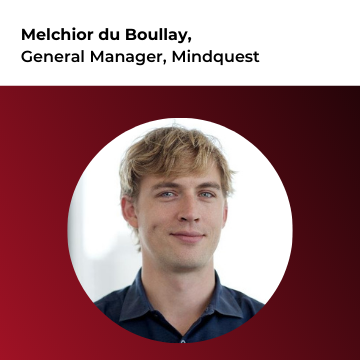
    Mindquest and its parent company Club Freelance are welcoming Melchior du Boullay as the new group General Manager. This entrepreneur, IT specialist, and business development expert is now back in his native France after 14 years in the United States. His mission: to lead the group’s fast-evolving organisational structure and propel its international expansion.

    A new
    structure for new needs

    Above all, the appointment of Melchior du Boullay comes as the recruitment group embarks on an acceleration phase, driven by the strong vision of its founders and materialized by the launch of Mindquest at the start of the year.

    In recent years, IT skills have become much more complex and harder to secure. Consequently of talent shortages, demand has shifted towards a stronger hybridisation of tech roles and careers.

    Discover The Top IT Skills to Master in 2021

    An agile approach to IT recruitment

    By providing both freelancer sourcing services and recruitment on permanent contracts, Mindquest offers an agile approach to IT recruitment that is unique in its sector. This approach meets both the needs of companies to build mixed teams (freelancers and permanent employees) and the desire of talent to break the linearity of their careers based on their evolving life plans.

    Profitable since day one, the Mindquest / Club Freelance group hopes to
    reach 70 million euros in turnover and 100 employees by 2025, compared to 21
    million and 35 employees at present. The ambitious plans include the deployment
    of the group’s services in several European countries: an expansion that will
    now be supported and spearheaded by du Boullay as new General Manager.

    A
    hypergrowth management specialist at the helm

    A graduate of the EPITA, the first Engineering and Computer Science school in France, and endowed with a strong entrepreneurial spirit, Melchior du Boullay has spent his entire career at oXya, a provider of technical services and cloud solutions for SAP customers, now part of the Hitachi group.

    Du Boullay held various positions there: IT consultant deployed at customers, SMBs and large enterprises, then project manager and development manager. His international career took him to Congo, Canada and various other countries. He then settled in the United States, where he has led the American subsidiary of oXya for 14 years and achieved double-digit growth year after year. Nearly 20 years of continued challenges and successful conquest have enabled him to acquire very strong expertise in management, process optimization, and corporate governance.

    The importance of inclusion and diversity

    Close to the field, to his teams, and to his clients, du Boullay has made inclusion and diversity his guiding principles and will be keen to put his passion for people at the service of Mindquest. His transatlantic experience will also be an asset in the context of the group’s international ambitions.

    Mindquest new General Manager Melchior du Boullay will work to take the excellent quality of service that characterises the company into a context of hypergrowth. A phase always difficult to manage.

    “My role will be to structure the organisation in order to realise the
    vision of its leaders. It’s about bringing together and engaging our entire
    ecosystem. It is especially important for me to preserve the values of goodwill
    and high standards that permeate the group and made me want to join this
    adventure. Coming from the IT world myself and having already had to manage
    complex phases of strong growth, I want to support Mindquest in its development
    while keeping its values intact. My goal is to make it grow from a recognised
    player to an undisputed leader both in its original French market and
    internationally, “assures du Boullay.

    For any press inquiries, please contact:

    Sarah Hachemi

    [email protected]

    Antoine Billon

    [email protected]

    ? Subscribe to the podcast

    Join our community and find your next job or expert in IT

  • 10 of the Best Cybersecurity Experts in the Netherlands to Follow Online

    10 of the Best Cybersecurity Experts in the Netherlands to Follow Online

    Certainly, information security only keeps gaining importance as more and more business-critical processes move to the cloud and hackers get more sophisticated. For this reason, you should stay up-to-date with best practices, top threats and emerging trends. That is why we at Mindquest suggest you 10 of the best cybersecurity experts in the Netherlands to follow on LinkedIn and Twitter. 

    Also disover our article: 10 of the Best Software Developers in the UK to Follow Online

    10 of the Best Cybersecurity Experts in the Netherlands to Follow Online

    Cybersecurity has become crucial in recent times, especially during the Covid-19 pandemic. As more and more companies had to implement their own virtual work environment, the need for cybersecurity experts grew exponentially. At Mindquest, as IT talents experts, we know the importance of getting the right contact to stay up-to-date and always match the top candidate for the best IT positions.

    Therefore, take note of the 10 best Cybersecurity experts in Netherland to follow online.

    Chantal Stekelenburg 

    LinkedIn | Twitter 

    Firstly, Chantal is head of Hackers at continuous security platform Zerocopter and also a co-founder and organiser of the Netherlands’ Women In Cybersecurity Community Association.  

    Oscar Koeroo 

    LinkedIn | Twitter 

    Oscar is currently leveraging his expertise as a Docent at Security Academy, where he imparts knowledge on Applied Cryptography.  

    Sanne Maasakkers 

    LinkedIn | Twitter 

    Also, Sanne has recently joined Mandiant, now a part of Google Cloud, as a Senior Analyst. In this role, Sanne brings her expertise in cybersecurity to the forefront, contributing to Mandiant’s mission of providing cutting-edge security solutions.

    Astrid Oosenbrug 

    LinkedInTwitter  

    Astrid is currently serving as the Corporate Social Responsibility Officer at ESET Nederland. In this role, she focuses on measuring the impact of the organization’s activities on society and the environment, promoting transparency and ethical behavior to contribute to sustainable development. 

    Floor Terra 

    LinkedIn | Twitter  

    Floor is a senior privacy advisor at data protection services Privacy Company He also specialises in high-impact projects combining technological and organisational solutions. 

    Connect by Mindquest- Newsletter

    Joost Schellevis 

    LinkedIn|Twitter  

    Joost is a tech editor at Dutch news organisation NOS. He writes about security and privacy issues and also reports on the country’s latest cybersecurity news. 

    Marjolijn Bonthuis 

    LinkedIn | Twitter  

    Marjolijn is deputy director at ECP, a public-private platform for the development of the information society. She is also the winner of Women in Cyber Security (WiCS)’s 2016 Woman of the Year Award. 

    Lodewijk van Zwieten 

    LinkedIn | Twitter 

    So, Lodewijk is a senior public prosecutor at the Dutch Public Prosecution Service specialising in combating cybercrime. He is also part of the supervisory board at the DIVD. 

    Anna van der Leeuw 

    LinkedIn | Twitter 

    Then, Anna is a privacy law expert at firm Allen & Overy, where she focuses on European Union regulations around ICT & Telecom, data protection and cybersecurity. 

    Rickey Gevers 

    LinkedIn | Twitter 

    Last but not least, Rickey works as Incident Responder at Responders.NU. Founded with the mission to elevate Incident Response to new heights, the company breaks away from traditional approaches to deliver unparalleled expertise and service.

  • 10 of the Best Developers in Germany to Follow Online

    10 of the Best Developers in Germany to Follow Online

    Whether you are a developer living in Germany or you would simply like to know what the German dev community is up to — Here are 10 of the best developers in Germany you should be following across the world wide web. 

    More interested in SAP? Here are 10 of the best SAP experts in Germany to follow.

    Discover 10 of the Best Developers in Germany to Follow Online

    As the IT environment is constantly evolving, it is crucial, if not necessary, to connect with the brightest minds to keep up with innovation. In other words, the more contacts you get, the more likely you are to solve IT challenges. Therefore, we at Mindquest are pleased to provide you with a list of the best IT talents to follow.

    Ilona D. 

    LinkedIn | Twitter | GitHub 

    Let’s start with a co-founder and digital product development lead at Foundsiders, Ilona. She is a coder and derivatives trader who helps developers become investors with financial tips and software tools.  

    Amber Wilson 

    LinkedIn | Twitter | GitHub | Blog 

    Then, Amber Fronted Web Developer at Ableton, a German music software company. Former front-end engineer at financial services firm N26. This web dev is an avid blogger and serves as an organiser and coach at codebar Berlin, a series of workshops bridging the tech diversity gap. 

    Stefan Judis 

    LinkedIn Twitter GitHub Blog 

    A senior Fronted Developer at acb.studio, Stefan is an expert front-end developer who loves sharing his expertise in web development. He also helps maintain Tiny helpers and Random MDN

    Aaron Iker 

    InstagramTwitter  

    Aaron is a creative developer specialising in UI and front-end development. He is currently busy working on several projects, including Done, Check and Shorticons. 

    Nikita Popov 

    Twitter Blog GitHub 

    Nikita then is a software developer at JetBrains an open source contributor focusing on PHP, LLVM and Rust. If you are looking for PHP tips, you can’t miss this dev.  
     

    Connect by Mindquest Newsletter

    Denise Nepraunig 

    LinkedIn|Twitter  

    An iOS developer at Volkswagen’s CARIAD and former SAP senior developer, Denise is always sharing Swift development tips and her adventures in software development.      

    Lara Martín 

    LinkedIn Twitter GitHub Blog 

    Lara is a senior Android developer and Google Developer Expert working at Blinkist. She shares Flutter and Dart tips and talks about developer life on Sketchnoting and at the CodeCafeteria podcast

    Olena Drugalya 

    LinkedIn Twitter GitHub |

    Besides an expert web developer, Olena is a full-time mom and part-time runner who loves sharing advice on HTML, CSS, JavaScript and React development.  

    Anna McDougall 

    Twitter YouTubeGitHub | Blog 

    This software engineer at Novatec is an avid YouTuber with a passion for helping others advance their careers and hone their coding skills. She is a full-stack developer specialising in JavaScript and React. 

    Sebastian Bergmann 

    Twitter GitHub Blog/Site 

    Last but not least, an authority in PHP, Sebastian is the creator of PHPUnit, a standard framework for testing PHP applications and projects. He also co-founded The PHP Consulting Company

    Also discover our article: What Makes a Successful Web Dev: Stefan Judis, Front-End Dev Expert

  • The Week in IT news: CPU Merges with RAM and 2021 IT Spending

    The Week in IT news: CPU Merges with RAM and 2021 IT Spending

    Here’s what happened this week in IT news.

    ? Subscribe to the podcast

    News story #1: CPU + RAM: the way ahead?

    Computers will soon be faster thanks to the fusing of CPUs and RAM. This is accordingly to that’s what SK Hynix CEO Seok-Hee Lee thinks. 

    The head of the world’s second-largest memory maker behind Samsung made this prediction during his keynote address at IEEE’s International Reliability Physics Symposium. Assuring that the central processing unit and the memory will eventually be integrated within a single die to deliver higher performance computing systems.

    To achieve this feat, Lee, whose company only produces memories and not CPUs, believes the chip manufacturing industry will need to come together and adopt a collaboration model focused on open innovation.  

    The Register

    News story #2: Top budget priorities for CIOs

    IDG’s annual State of the CIO survey clearly shows how the pandemic has affected IT spending. After a 2020 impacted by tightening budgets and a sole focus on mission-critical initiatives, the priorities for this year are somewhat widening.

    This year’s three main business drivers for IT are transforming business processes, increasing cybersecurity protections and improving customer experience. 

    To do so, CIOs will be putting most of their money into technologies. This will include data and business analytics, security and risk management, cloud-based enterprise applications and customer experience technologies. Global budgets are expected to increase by 6.2% to cover this broader spectrum. 

    CIO

    News story #3: Cloud spending (finally) surpasses on-prem

    And speaking of spending —  enterprise cloud spending topped that made on data centers for the first time last year. Nothing too unexpected in terms of IT news of the week. But one thing is to know change is coming, and a whole different story is to have confirmation.

    A global report by the Synergy Research Group reveals businesses spent 35 percent more on cloud-based solutions, taking the total up to almost $130 billion. Conversely, spending for on-premise solutions went down six percent to less than $90 billion. 

    CIOs are spending most of their cloud budget on servers storage, security and software. When it comes to software, however, it is important to mention that the report mainly looked at server OS and virtualisation software — comparing software-as-a-service with on-prem business apps software would render way different results.   

    IT Pro Portal

    Check out more of our interviews from our podcast episodes.

  • The Week in IT news: Agile turns 20, the Web 30, and light-based computing moves ahead

    The Week in IT news: Agile turns 20, the Web 30, and light-based computing moves ahead

    Here’s what happened this week in IT news.

    Full podcast episode:

    ? Subscribe to the podcast

    Check out more of our interviews from our podcast episodes.

    News story #1: Agile after 20 years

    With the manifesto for Agile software
    development turning 20 this year, industry insiders are looking back at the
    philosophy’s two decades of existence to see how deeply embedded it actually is
    among the world’s businesses. 

    While
    most companies have fully bought into the idea of Agile and are on board with
    its values and principles, the term “agile” is still a buzzword
    rather than a true practice in many cases. 

    According
    to experts, organisations often resort to Agile methodologies as a simple
    solution to accelerate their digital transformation projects. In doing so, they
    fail to implement the development framework as a wholistic philosophy that ties
    IT with business objectives.

    Automated testing and deployment and rapid feedback loops have been widely adopted by industry players, but better value stream mapping and new business-oriented performance metrics will be needed if we are to unleash the full potential of Agile.       

    ZDNet

    News story #2: Berners-Lee’s annual letter

    Just like Warren Buffett, Tim Berners-Lee
    (a.k.a. the father of the world wide web) has made a habit out of sending an
    annual letter reflecting on the state of the Internet world.

    Last
    Friday, March 12th, marked the 30th anniversary of the web, and Berners-Lee,
    who has always been adamant about making the Internet a more inclusive medium,
    turned his attention to universal access to the Internet, web-based
    environmental initiatives and curbing online abuse. According to Berners-Lee,
    the pandemic has accentuated the difference between the 2.2 billion young
    people who lack stable Internet access and those who don’t. But it is the web’s
    hostility towards minorities that worries him the most.

    Yet, despite his concerns regarding “the toxic Internet,” Berners-lee is optimistic about our ability to make online forums a safer place. Specifically, he points towards big social media platforms as the ones who should be implementing the changes to make that happen. The way forward, says Berners-Lee, should be building “social networks where bad things happen less.” 

    The Guardian

    News story #3: Mirror-based computers

    The end the week in IT news — While quantum computing is the alternative to traditional computers that gets the most attention these days, it is not the only new kid in the block. 

    Researchers
    are also exploring ways to make standard bit-based computation faster and more
    efficient — and we are not talking about cramming more transistors into a
    silicon chip. It’s more about re-inventing the traditional transistor
    altogether. After all, we don’t need all future computers to be quantum; faster
    traditional PCs should suffice for most tasks. Enter light-based computing.

    University of Cambridge researchers have discovered a way of making a material switch between glass and mirror with a short laser pulse. This type of optical switching is way faster than current computer switches — about a million times faster. It also consumes a fraction of the energy. Plus, the switch could be applied to quantum computing as well.   

    Phys.org

    Join our community and find your next job or expert in IT

  • Weekly IT News: Eco data centers, a Microsoft hack and the EU’s digital sovereignty

    Weekly IT News: Eco data centers, a Microsoft hack and the EU’s digital sovereignty

    Here’s your weekly recap of IT news.

    ? Subscribe to the podcast

    Join our community and find your next job or expert in IT

    News story #1: Data centers to curb carbon emissions

    One of the main arguments against the
    expansion of cloud computing could turn out to be one of the strongest reasons
    for the technology’s wider adoption. 

    Data
    centers have long been known to need vast amounts of power to keep their
    servers cold and operational. Basic logic dictates more data centers will
    translate into greater electricity consumption, but, as is often the case with
    global issues, basic logic is not always enough.

    For each
    centralised data center in a cloud network, fewer, discrete computing resources
    will be needed to sustain the productive ecosystem. And that means energy
    savings. Additionally, smarter data centers can reduce electricity consumption
    by optimising power distribution and the cooling of servers. 

    Well, according to new research by IDC, a combination of these two strategies could save the planet 1B metric tons of carbon emissions by 2024. 

    ZDNet

    News story #2: The Microsoft hack

    Problems keep piling up for American
    cybersecurity experts. And, consequently, for everyone else. On the heels of
    the SolarWinds hack that left thousands of companies and government bodies open
    to vulnerability exploits, Microsoft announced on March 2 that suspected
    Chinese-sponsored attackers had identified 4 zero-day exploits in the company’s
    Exchange business email solution. 

    While Microsoft immediately released a patch, other hackers have since been busy at work looking for users who have yet to install the update. But even those who patched the issue might still be at risk, as some hackers are targeting backdoors that were put in place during the original attack and never discovered.

    Organisations around the globe experienced issues as a result of the breach, including the European Banking Authority. Given how widely used Miscrosoft Exhange is, we can expect other prominent institutions to come forward in the coming days. 

    DCK

    Story #3: The EU wants digital sovereignty

    Finally, the European Union unveiled on
    Tuesday a plan to double its chip manufacturing capacity by 2030. 

    The
    so-called Digital Compass plan aims to advance the eurozone’s digital
    sovereignty by funding a series of technology initiatives that grant the region
    greater autonomy. 

    In
    addition to scaling up the production of semiconductor processors to 20% of the
    global market, the EU wants 5G access for all houses, the online availability
    of all key public services, and also to build the union’s first quantum
    computer. 

    Although vital to Europe’s geopolitical position in a tech-powered future, the chip-manufacturing part of the plan will prove challenging. Making chips is very expensive, and the European industry will have to pivot from building the machines needed to fabricate chips to making the chips themselves. 

    The Verge

    Check out more of our interviews from our podcast episodes.