Tag: IT careers

  • IT Pros: The Best Free Software Tools to Organise Your Activity

    IT Pros: The Best Free Software Tools to Organise Your Activity

    What are the best free software tools to organise you activity as an IT Pro? We all have our own method to organise our daily and weekly tasks, but that doesn´t mean we shouldn´t be keep trying new things to see what we can improve. Better time management will allow you to increase your productivity, develop stronger relationships with your team and clients and even have some extra time to work on your career development strategy.

    To make that easier, we have put together a list of free software tools in the hopes you discover at least one you are not yet using. If that’s not the case, you can take this list as validation of how good a job you are already doing. Wink. Wink.

    Some of these tools are completely free, while others also offer several subscription tiers. Whether you are an independent contractor or part of a company’s IT department, they will help you build better and more robust projects, more effectively and in less time.

    Also read our article: IT Pros: How to Work On Remote in the Post-Pandemic World

    Best free software tools to organise you activity

    Google
    Workspace

    Best Free Software Tools to Organise Your Activity: Google Workspace

    Does this one
    really need an introduction? Well, maybe. Especially since Google recently went
    and rebranded G in a move that surely confused many of us out there. Now known
    as Google Workspace, the productivity suite is a whole world in and of itself. From
    storage, to document collaboration, you will find in it everything you need to
    carry out all your basic everyday tasks.

    Even more
    so since the rebrand, Gmail serves as the platform’s backbone, making it easy
    to create an efficient workflow between your email, calendar and files.
    Workspace also comes in handy when you need to share and work on documents with
    clients or people external to your organisation. Google Sheets is great for
    easily storing and sharing data sets.

    Google Workspace

    Evernote

    Best Free Software Tools to Organise Your Activity: Evernote

    Evernote is pretty much the only notebook you will ever need, and it’s free unless you want to use it in more than two devices at once.

    It’s very intuitive and quick to use, and it allows you to share individual notebooks and notes with other people, anytime, anywhere. In addition, Evernote can integrate perfectly with other tools like Google Workspace and Slack, making it an ideal solution for collaboration.

    You can include almost anything you want in your notes, from images and videos to PDF documents. Furthermore, the Evernote web clipper tool makes it possible to capture screenshots and ideas directly from the web. This information is saved in a note which includes a link to the original page. All your searches are saved in one place for easy access. You can also scan physical documents directly on the app.

    To transfer your emails to Evernote, you only need to forward them to your
    unique Evernote email address.

    Evernote

    Trello

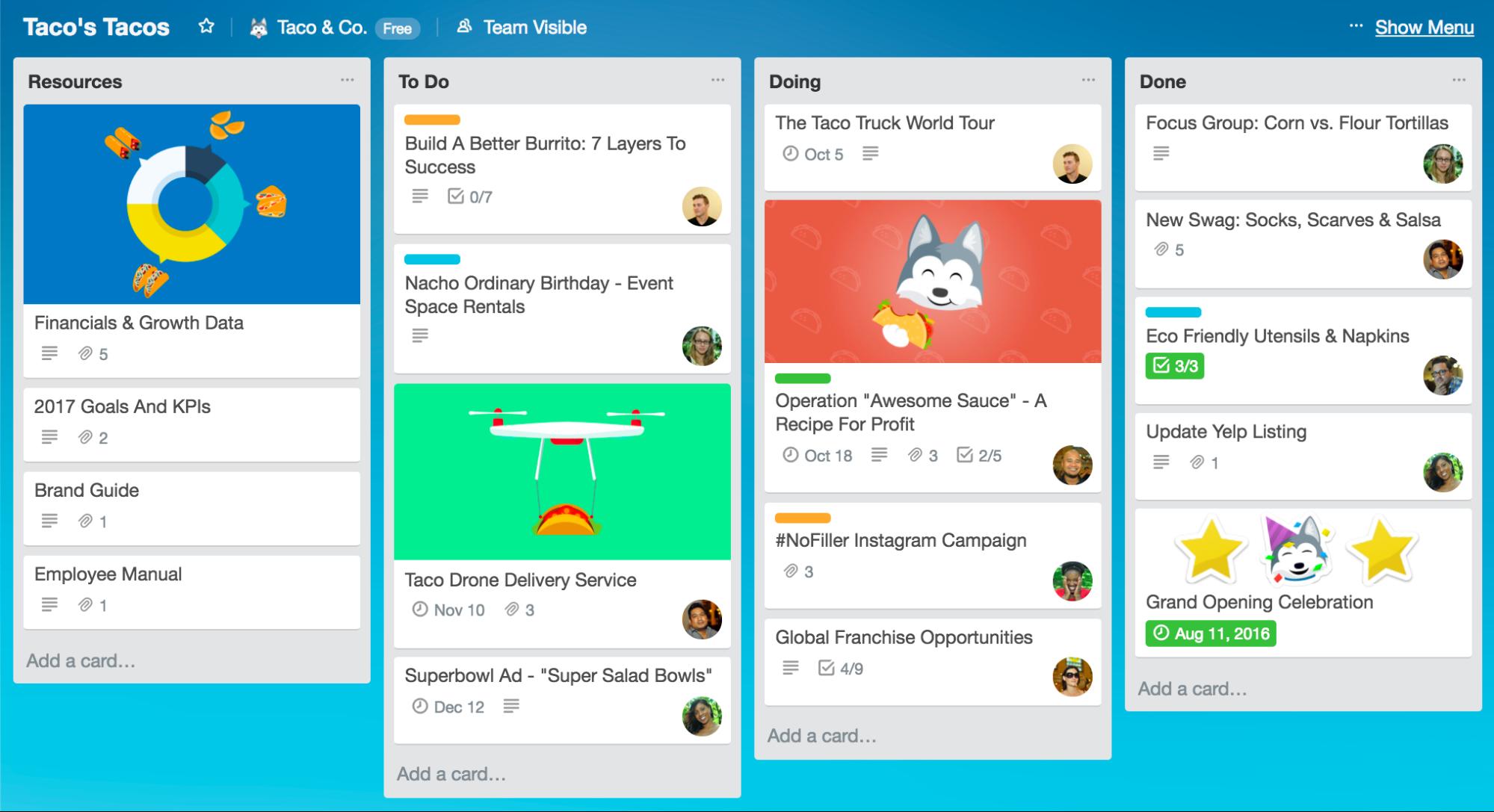
    Best Free Software Tools to Organise Your Activity: Trello

    This
    easy-to-use project management tool will inevitably improve your daily life. Juggling
    between a thousand tasks is not, well — an easy task. No one enjoys forgetting
    a deadline or wasting their time.

    Trello allows you to create and manage to-do lists and set up reminders, so you don’t miss anything. What makes it particularly compelling is how simple and intuitive it is to use, letting you organise your activity without adding more work to your already packed workflow.

    It’s advisable to use Trello in combination with another very practical and free tool: Toggl. This time-tracking tool allows you to have a precise idea of ​​the time you spend on each task on a daily basis. The goal is not to waste too much time on tasks that require a disproportionate time investment and to manage your time better to improve your productivity.

    Trello

    Asana

    Best Free Software Tools to Organise Your Activity: Asana

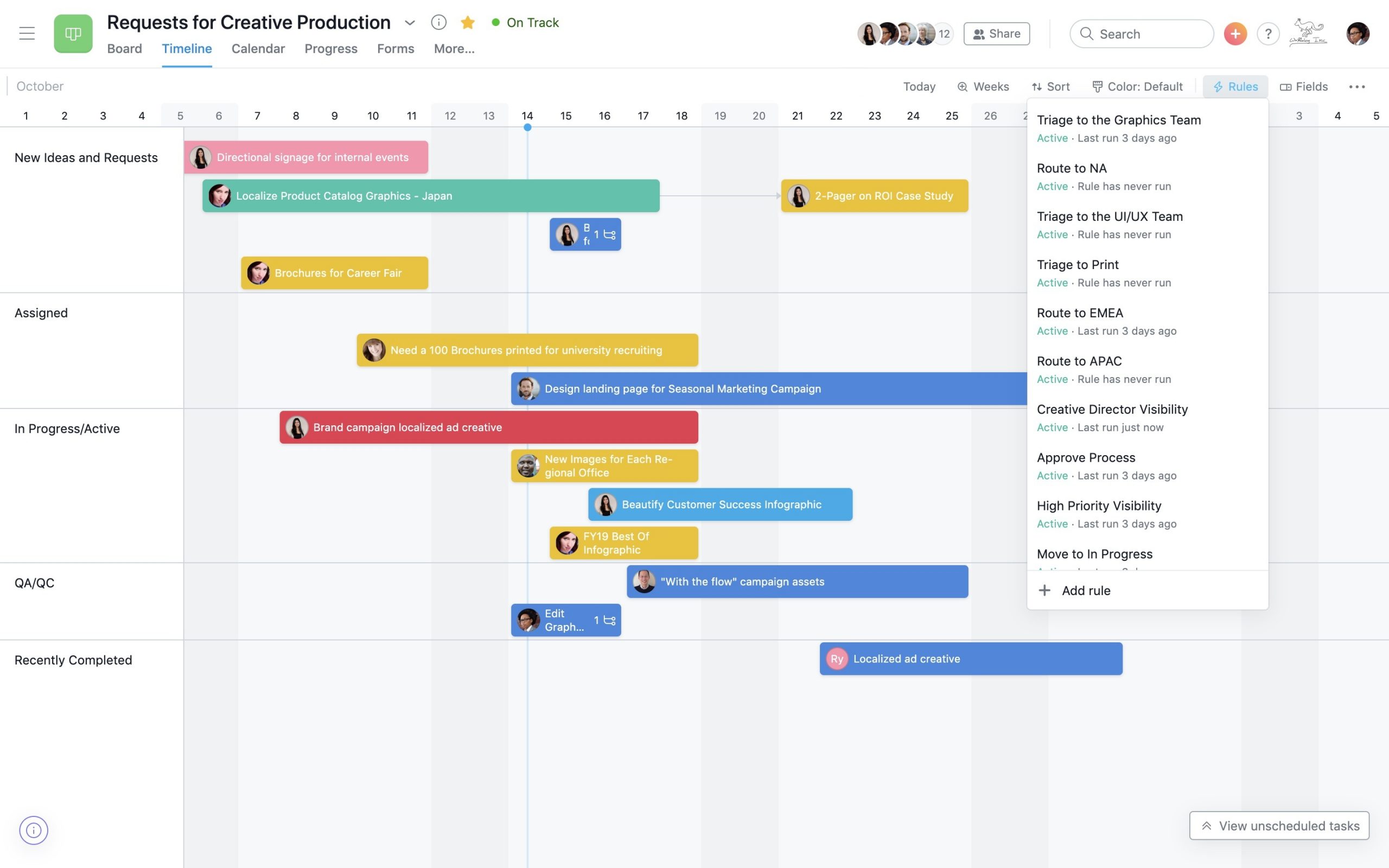
    Asana is a free tool that was originally created at Facebook to organise internal workflows. Compared to Trello, this project management tool loses the simplicity but offers endless customisation and deeper integration with existing workflows. It is particularly useful for collaborative projects.

    You can assign and delegate tasks to collaborators and set the deadlines to meet. The whole team can easily see all pending and completed tasks in a single place. Everyone is then able to plan their time to their taste to meet the specified deadlines.

    Asana

    Calendly

    Best Free Software Tools to Organise Your Activity: Calendly

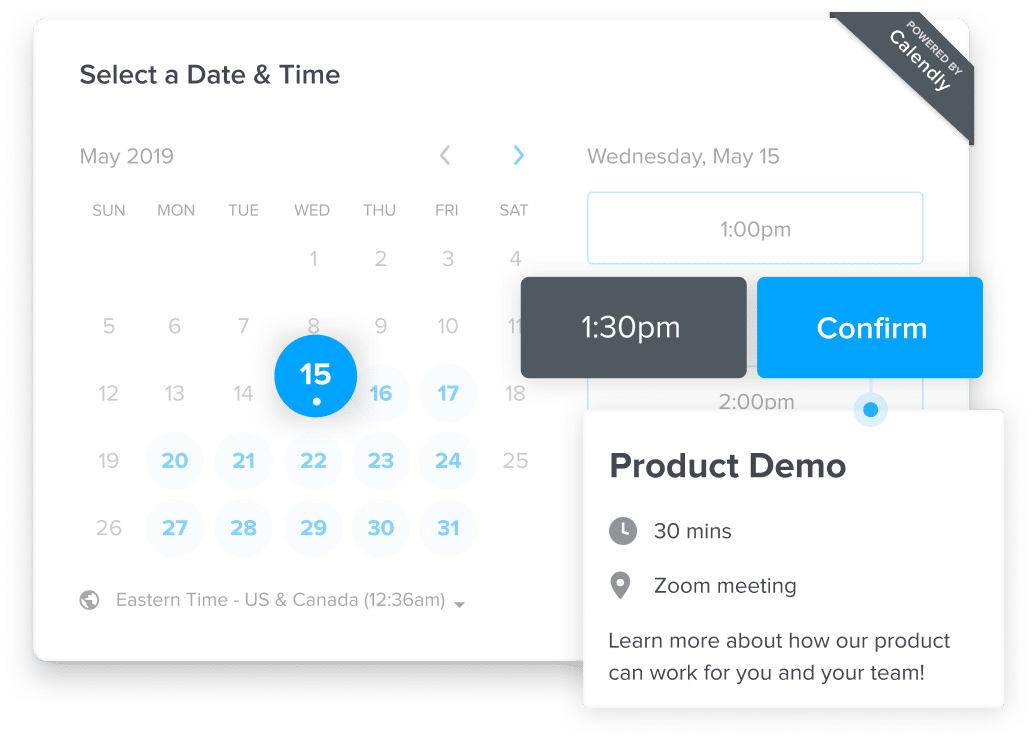
    Calendly works
    with your Outlook, Google, iCloud and Office 365 calendars, allowing you to
    consolidate all your schedules into a single one for optimal management of your
    time. It also allows you to precisely define “break” periods between several
    meetings or projects, to create secret events, and to avoid certain meetings or
    last-minute appointments. 

    But perhaps
    the best thing about Calendly is its automated scheduling feature, which saves
    you the time-consuming hassle of having to send back-and-forth emails to agree
    to a time that works for both parties.

    The tool is
    perfect if you need to collaborate with people from other countries since it
    automatically detects the time zone of your contacts for even smarter time
    management. 

    Calendly

    Need advice on how to start or develop your freelance consulting business in tech or IT? Need to start a new permanent or freelance assignment? Join Mindquest and get support from our team of experts.

    Discover more content:

  • How to become an IT consultant that stands out from the crowd

    How to become an IT consultant that stands out from the crowd

    Nowadays, it is not enough to become an IT consultant, you need to stand out from the crowd to succeed in your career.

    Here are a few quick pointers that will help succeed in your career path as an IT consultant.

    Become an All-Terrain IT Pro

    1# Reach a good level of experience

    Cultivating a solid
    background at the end of your studies will allow you to differentiate yourself
    from candidates who are either too junior or too senior and therefore too
    expensive. Five to ten years of experience is usually the sweet spot in terms
    of employability.

    2# Forget hyperspecialisation

    Locking yourself into a skill and mastering it from start to finish may seem like the right way to go in order to differentiate yourself from overly generalist profiles. And in fact, there is nothing wrong with specialisation. It can be a solid career strategy. However, in the world IT —and especially if you are an independent contractor— it pays to adopt a multi-specialization approach. You don’t have to confine yourself to a single language or skill. You should not be satisfied with simple expertise either. Aim for “mastery”. Recruiters will move on quickly if mastery is not conveyed through your CV and profile.

    3# Certify yourself

    Having the right certification for the right position is a good approach. Certifications worth pursuing include Microsoft certifications, Ninja, Dev Star, and Code Crazy.

    4# Soft Skills

    Mastering the technical part of a position is not everything. Your personality will also weigh in the balance. Recruiters are looking for candidates who can be at the same time pleasant, knowledgable, committed, brilliant, altruistic, punctual, cunning, eloquent, humble, methodical, polite… Whether it is negotiation or communication, you need to master your soft skills as well. These are the essential soft skills every IT professional should have.

    5# Compensation

    Sensitive topic, but be realistic with your salary expectations and be ready to lower them a bit is the market calls for it. Especially considering the economic uncertainty brought about by the o pandemic.

  • The Advantages of Working On-Site in Times of COVID-19

    The Advantages of Working On-Site in Times of COVID-19

    What are the advantages of working on-site in times of Covid-19? Even with COVID-19 pushing companies to adopt higher levels of telework, as an IT professional you can really benefit from the closer contact that comes with physically joining your team at the company’s premises.

    Although it might not
    be your choice to make depending on your company’s policies, you should try to
    spend at least some time in the office each week whether it is for meetings or
    to work on your daily activities. These are the advantages of working on-site.

    First of advantages of working at the office: a teamwork booster

    Many companies prefer having their employees working from the office rather than remotely. The reasons behind this choice are numerous and tend to vary depending on the type of industry, the country’s regulations and company culture. It also depends on whether or not the company is able to facilitate a COVID-free space for employees to work safely.

    The biggest advantage of working on site is that it makes it easier to interact
    and bond with the rest of the team, promoting integration and speeding up
    progress on your projects.

    You can also take
    advantage of all the company’s amenities: the printer, the Internet network,
    the cafeteria, gym, etc. Small advantages which can contribute a great deal to your
    general well-being and job satisfaction.

    A remedy for
    isolation

    Remote workers often complain
    about the feeling of loneliness and isolation that comes with working only from
    home. Recent global lockdowns made us all quite aware of this problematic.
    It can be difficult to be alone in front of your computer all day long. Going
    to work at the office allows you to share your day with colleagues and set a stable
    rhythm for both life and work. 

    It can be easy for home workers to become demotivated and procrastinate. Having to go into the office at fixed times and being able to leave once the job is finished allows for better time management while guaranteeing a real break between the private and professional worlds.

    IT Pros: How to Work On Remote in the Post-Pandemic World

    Develop stronger relationships

    Working on-site gives
    you greater access to all the key interlocutors involved in the
    project and helps you not get stuck in case of doubt or lack of direction.
    But, most importantly, being physically present lets you develop stronger links
    with your colleagues and superiors and improves transparency.

    Discover our special IT pros guide: IT Job Hunting Done Well: A Step-by-Step Guide

  • Site Reliability Engineer (SRE) : Job Description

    Site Reliability Engineer (SRE) : Job Description

    Use our template to create a compelling and comprehensive Site Reliability Engineer job description to attract top talent.

    The Site Reliability Engineer (SRE) is an increasingly coveted function within IT departments.

    The Site Reliability Engineer role stems from an approach to production systems management created within Google in 2003. As well as from the expansion of the DevOps mentality. The function is based on the implementation of synergies between development and operations to accelerate the creation and deployment of applications.

    Also discover our interview: How to Become an Azure MVP

    What is the role of the SRE?

    Analyze project specifications

    The first mission of an SRE is to analyze all security and operational problems of an application. Figuring then out what works and what doesn’t to optimize it.

    Work in collaboration with developers and salespeople

    The SRE regularly meets with developers and salespeople to benefit from their feedback and do a better job. The opinion of both sides is important to understand user experience and what the users criticize in terms of safety/reliability. They must understand what the developers have do at the technical level to assess problems more effectively.

    Deploy automation

    In order to save time and be more efficient, the site reliability engineer should be able to set up automated processes for recurring tasks.

    Also read the IT Infrastructure best practices

    Required skills of the SRE

    Be comfortable with programming languages

    The SRE should also be able to write and program all types of applications. And should also be comfortable with the most used coding languages including JavaScript, Java and .NET. More recent tools, ​​like Node.js or Golang, are also a plus.

    Translate business language into technical language

    In addition, when the SRE receives the specifications, they must be able to understand the app’s business goal and then put in place the technical means to resolve the problem.

    Understand all points of view

    The site reliability engineer will also have to put himself in the shoes of the developers. But also of the end users to understand what roadblocks may arise and how to overcome them.

    Within the industry

    In general, an SRE is first and foremost a developer, who, in addition, has knowledge of operational infrastructure and performance issues.

    Salary of the SRE

    The average daily rate of a Site Reliability Engineer fluctuates between €550 and €750.

    Training to become an SRE

    To become a Site Reliability Engineer, it is best to have a background in computer science and a focus in language and programming.

    ? Subscribe to the podcast

    Join our community and find your next job or expert in IT

    How To Code Well: Taking Breaks and Other Pieces of Timeless Career Advice

  • Pentester

    Pentester

    The pentester is a role related to the field of cybersecurity security. Its name comes from “penetration test.” The main role of a pentester is to ensure the security of information networks and applications (back end of a site, applications, etc.) and protect systems against cyber attacks.

    What is the role of the Pentester?

    Check website reliability

    As the name suggests, the pentester performs tests with controlled intrusions into the company’s computer systems to find possible vulnerabilities.

    Fix issues

    After the testing stage, the pentester has to find and implement solutions to resolve the flaws identified. They will then have to reinforce and optimize the security of the applications.

    Provide advice and guidance

    The pentester also plays an advisory role. They must anticipate threats, put in place best practices and recommend more effective protection tools.

    Required skills

    Programming mastery

    The pentester should be proficient and familiar with programming and web programming languages, cryptography, coding systems, and network security auditing (Python, C / C ++, Java, PHP, etc.)

    An educational vocation

    The pentester must be able to effectively convey encountered flaws to site and application developers. They must therefore be educators with the ability to communicate well with the developers and technical teams, to know how to clearly communicate problems to help manage them as well and quickly as possible.

    Rapid action

    When an intrusion occurs or a security problem is identified in a computer system, it must be resolved quickly. A poorly protected system can be devastating for the business. The pentester must therefore demonstrate reactivity and proactivity.

    Within the industry

    A pentester can progress to a managerial position or any other senior position in the field of cybersecurity. Their job is critical in an IT world where cyber attacks are growing more and more recurrent.

    Salary

    The average daily rate of a pentester fluctuates between €300 and €600.

    Training

    To be a pentester, you usually need to have an undergraduate or graduate degree in an IT-related discipline and demonstrate at least a base level of cyber security knowledge and experience.

  • IT Contractors: How to Manage Your Activity in This Unprecedented Period

    IT Contractors: How to Manage Your Activity in This Unprecedented Period

    The dual health and economic crisis we are going through creates a particularly high level of uncertainty and instability. And it will probably last for a while. How to manage your activity?

    In this unprecedented context, independent consultants may fear a drop in the number of new assignments and income. Here are a few thoughts to help you better understand the situation and come up with a strategy to maintain and develop his activity.

    Also discover our special guide: IT Job Hunting Done Well: A Step-by-Step Guide

    The state of the market

    In this period of relative normality, many wonder what the next few months will look like in terms of economic activity. And it is true: the outlook is worrying. All predictions point at GDPs falling across the world’s biggest economies.

    While not the hardest hit, the IT industry will nonetheless feel the impact of the Covid-19 crisis. Gartner recently published a new report in which it estimates that global CIO spending will fall by 8% in 2020.

    Before the crisis; during the Gartner IT Symposium, October 20, 2019; the same analyst predicted an increase of 3.7% in 2020. Entering now a period of resource management and reassessment, CIOs will suddenly be forced to prioritize critical services.

    IT Pros: How to Work On Remote in the Post-Pandemic World

    As a result, many projects are and will be postponed. This isn’t a complete market shutdown or outright cancellation of projects, but the impact is going to be heavy nonetheless. And there’s no denying the fact that freelancers are often one of the first to be scratched of the budget.

    However, and this is the first reason to remain positive, IT freelancers are also the ones who are called on first when projects restart. (We are already seeing this with the confirmation of many migration projects to SAP S/4HANA). Freelancers offer companies a flexibility that is an obvious advantage in a context where business is unstable and where uncertainty remains.

    We should also take a closer look at the IT sector, since its different sub-segments are not impacted uniformly. In some areas, the role of the IT department has even been reinforced by the crisis and certain skills are in greater demand.

    With the advent of teleworking in particular, IT departments are under heavy pressure to implement dedicated technologies. While overcoming the cybersecurity challenges that go hand in hand with this trend.

    Sign up to to Mission Contol Center Newsletter

    Manage you activity: Tips for adapting in times of crisis

    Several best practices can be recommended to manage your activity in times like these. The choice of industry is the first element that deserves the attention of IT freelancers looking for a job. If this choice was already important before the crisis; now it is even more so as all the sectors of activity do not suffer the same impact.

    It is, therefore, advisable to sectors that are experiencing a strong peak in activity due to the Covid-19 crisis. Such as mass distribution, health or even online entertainment and education.

    The second tip is flexibility. More than ever, the independent consultant needs to adapt to changing situations and be more flexible on certain criteria for choosing an assignment, such as the location or the context of the assignment. It is not about accepting just anything or being underpaid, but simply about punctually and opportunely expanding your usual criteria. For example, it may be wise to position yourself more in the area of TMA (third-party application maintenance) and carry out small assignments rather than embarking on full-fledged projects.

    It is also important to pay special attention to your “self-marketing.” As always, you must know how to sell yourself. This can start by taking stock of your skills and aspirations to properly orient the way of presenting yourself before employers. Being active on social and professional online networks is also something that will help you stand out from the crowd and develop new connections.

    Finally, you have to continue to train and learn, all while cultivating your softer skills. Keep in mind that the ability to adapt in times of crisis and other interpersonal skills can often make the difference between two similar candidate profiles.

    Stay positive

    Focus on the positive. We know that we have entered a difficult and complicated period from an economic point of view. However, as we have seen, there are several things that should keep IT freelancers positive. First of all, the IT sector is largely spared compared to other sectors (tourism, catering, hotel industry, etc.).

    Secondly, the pandemic has strengthened the role of IT departments (setting up teleworking, cybersecurity, etc.), and the current circumstances can encourage companies to resort to hiring more freelancers.

    Join our talent community - Mindquest

    Join our community and find your next job in IT

  • How to Advance Your Career as an IT Freelancer

    How to Advance Your Career as an IT Freelancer

    Freelancing is often spoken of as the future of work. Many people turn to this way of life to gain more autonomy and freedom and be able to focus on the kind of work they enjoy the most. In the world of IT in particular; where the share of freelance workers keeps on growing, the career prospects are very promising. Freelancers are not limited by that many obligations and can develop professionally as they wish. How to advance your career as an IT freelancer?

    When you are an employee in a company, your career development is often planned and monitored by the HR department or by management. When you are a freelancer, you have to put in place a professional development plan by yourself.

    Here are a few tips on how to do that.

    Technology and IT, a rewarding sector for freelancers

    In the digital and technological fields, freelance workers generally have no difficulty finding new assignments, but finding the dream assignment is another story.

    With equal experience, a tech or IT consultant such as a full-stack developer will have less difficulty finding interesting opportunities than a freelancer in the creative arts. The technology sector is a one particularly sought after by companies, with the best organisations competing to attract and retain the best talent out there.

    Top freelancers performers in tech are in high demand, and that is an advantage for anyone who is qualified and passionate about their area of ​​expertise.

    Advance your career as an IT freelancer: specialize to evolve

    The top freelance consultants are usually former junior freelancers who have evolved through countless assignments over the years. The choice of your missions, then, is key in the construction of a solid professional progression.

    Expert profiles, those that are very specialized in a given technology, are very popular with companies. Think carefully and specialize in a skill or technology that is booming right now or will do so in a couple of years. Consultants specializing in cloud, cybersecurity and data science are very popular right now. For example, as companies wage a war for talent to fulfil their digital transformation goals.

    By choosing a promising area of ​​expertise and developing your skills over time, you can achieve a higher average daily rate (ADR). Keeo on re-skilling so that your rate can increase over time. It is about constantly re-evaluating the added value of your work for your clients.

    Evolve by taking on managerial functions

    Another option to progress in your career when you are an IT consultant is to become a manager. Project managers or team leaders tend to access managerial responsibilities. Which often validate their technical or business skills, and allow them to work on larger projects.

    This type of evolution is often considered the golden road to progress when working in IT. Since it allows you to “climb the ladder” in a consistent way. But managerial roles are not suitable for all profiles and are not an end in themselves for many IT freelancers, who prefer to focus on their area of expertise.

    Manage your own skill development in order to advance your career as an IT freelancer

    To develop your career as an IT consultant, you obviously need to gain experience. But don’t neglect training! And that’s not only because technologies keep evolving at a rapid pace. But also because you need to devise a solid methodology to speed up your skill development.

    But that’s not all. Companies are looking for experts with advanced technical skills, but it is also often interpersonal skills that make the difference. Soft skills, such as communication skills, leadership or creativity are more than ever essential to the success of companies’ digital transformation projects.

    Many training courses exist to improve these behavioural skills, including online training. Take advantage of them.

    ? Subscribe to our podcast

    Join our community and find your next job or expert in IT

  • Should You Become a Freelance S/4HANA Consultant?

    Should You Become a Freelance S/4HANA Consultant?

    If you are an S/4HANA expert living the 9-to-5 life, chances are that you have considered going independent at some point. No one would blame you. Becoming a freelance S/4HANA consultant can be a solid career choice  

    Proof of this is the resurgence of self-employed workers we have been experiencing since 2018. However, this sweet desire often clashes with the harshness of reality. Plus, this lifestyle is not for everybody.  

    Hence the importance of being prepared. It is essential that you ask yourself the right questions at the right time. Focus on these essential questions. 

    Here are a few honest questions you should ask yourself before blindly jumping head-first into the unknown. 

    The real reasons for your wish to be a freelance S/4HANA consultant

    The first question you need to answer bluntly is why you really want to become a freelancer. What are your underlying motivations? Would you like to have more free time or no longer depend on an employer? Or is it because you would like to have a wider variety of projects from which to choose? Is it for financial gain? 

    If your main arguments are mostly “anti-wage,” well – that is not always a good sign. There is the danger of opting for independent employment as a means of escape rather than as a set career goal. If it is only a question of no longer being a permanent employee, it is very likely that you will quickly be faced with the harsh reality. Being a freelancer doesn’t mean drinking French press coffee and decorating your table with a succulent plant while strumming a few hours a day on your keyboard. It is a real commitment, a new way of living and organising your day. 

    You should take a look at what kind of relationship you have with work, identify your professional aspirations and define your priorities.  

    Assess your strengths and areas for improvement 

    Most often, someone embarking on a freelancing life already has years of salaried employment behind their back. They are, hence, well aware of their strengths and weaknesses. Making an honest self-assessment is a must to orient your future moves.

    If you are disorganized by nature, for example, it will be good to put an effort into developing your organisational skills. You could use one of the many apps targeted at freelancers or improve your time-management methodology

    You should also pay attention to your starting point. If you are starting with a non-existent network, this is a disadvantage that you will need to work harder to overcome. If you have a financial safety net, then you have an advantage compared to those who start without any safety net.  

    However, don’t turn these disadvantages into barriers. On the contrary, these must be seen as challenges to overcome, to push you to go even further and stay motivated. 

    In some cases, it can be a good idea to do a little training before you start, to network a little and save enough money to be able to deal with unforeseen events. Take advantage of this period to clarify and outline your services offer and make a business plan. 

    Defining your offer and your target audience 

    Freelancing encompasses a large number of roles and services. An S/4HANA consultant must properly market their expertise in order to be successful. Their profile must fit into often-searched categories and nevertheless stand out from competitors. 

    There are many questions to ask yourself at this stage: 

    • What services should I offer? Which kinds of jobs do I want to do as a freelance S/4HANA consultant? 
    • What elements should I highlight to stand out from my competition? What are my strengths? 
    • How much is this kind of work worth today? 
    • Who is my offer for? 

    Pay attention to state and European regulations 

    This step is crucial. Depending on the country you plan to operate in, there will be several legal forms and statutes that you are obliged to comply with. Efficient management of your fiscal and employment status takes knowledge and caution. 

    For example, you should find out about the rules governing sick leave and unemployment benefits before you start. The world in which you enter is radically different from the salaried one. 

    Creating a personal business entity is a good place to start. Administrative and management procedures are greatly facilitated and you can often benefit from advantageous social contribution rates. Taxation is also interesting here.

    Working with industry-savvy recruiters can also help you choose your status and navigate the regulatory landscape.  

    Explore our definitive S/4HANA Careers Guide. to gain more insights into S/4HANA careers and how to best approach them.

    Sign up to mission control center newsletter

  • E-CRM Project Manager : Job Description

    E-CRM Project Manager : Job Description

    Use our template to create a compelling and comprehensive E-CRM PM job description to attract top talent.

    The e-CRM (electronic customer relationship management) project manager position is at the crossroads of the IT, marketing and sales functions. This role occupies an important place in the field of customer relations on the web; since it coordinates the implementation of digital campaigns across all of the digital platforms of a company.

    Explore also the role of the SOC Analyst: Job Description

    What is the role of the e-CRM Project Manager?

    Build the appropriate databases

    The experts must first identify the target customers in order to adapt all pertinent actions according to the objectives set. They must then define the means to collect all the relevant data for a given customer. For example, age, family situation, opinion on a product, etc., and they must set up the according processes.

    Develop programs to connect with customers

    Further, the e-CRM Project Manager must use the right methods to create links with customers and retain them. For example by sending email campaigns. The objectives are to better understand the consumer and retain them to develop sales and generate profit. One of the priorities of the position is therefore to analyze the behaviour of users and their browsing habits.

    Put in place strategies to offer products that meet customer expectations

    In addition, the goal of the e-CRM Project Manager is to provide value to the customer. To meet their purchasing potential and follow the evolution of their tastes. They need to define a strategy for leveraging visitor and customer data and implement e-CRM solutions to offer products adapted to the profile of each contact. They then set up automated campaigns and tracks their actions to measure ROI.

    Required skills to

    Excellent analytical and project management skills

    The e-CRM Project Manager must also know the client and develop a link between them and the company. For this, they must have robust data processing and analytical skills and a strong appetite for project management.

    Good ability to interpret customer reactions

    Good interpersonal skills are a must here. The expert is in direct contact with the client and must have good interpersonal skills to be able to interpret user behaviours and needs.

    Strong technical knowledge of digital tools

    The expert in e-CRM Project Management must have perfect knowledge of the various digital tools employed by the company. In order to carry out the relevant analysis, ensure the correct implementation and monitoring of campaigns. They must also master statistical tools.

    Also discover the other Project Managements roles and career paths

    The E-CRM Project Manager within the industry

    This job has been very popular for some years now and keeps attracting more and more young graduates in commerce, IT or marketing. However, there are not that many available positions, and the hiring rate is relatively low due to strong competition.

    This role has developed in many sectors of activity: e-commerce, banking, insurance, telecoms …

    Salary of the e-CRM Projet Manager

    The average daily rate fluctuates between €500 and €900.

    Training of the e-CRM Project Manager

    Most e-CRM Project Managers have a university-level degree. Studies in sociology and training as a webmaster also help you gain access to this kind of position. But you should know that prior professional experience is essential before becoming an e-CRM Project Manager.

    In terms of evolution; after a few years of experience as an expert in e-CRM Project Management, it is possible to occupy a position of marketing director in a relatively technical context.

  • Time Management Tips in remote for IT Professionals

    Time Management Tips in remote for IT Professionals

    Discover our time management tips in remote for IT Professionals. Having independence in one’s work is a great thing for any driven professional who likes to take the initiative. But it is not all advantages.

    Working independently lets you distribute your energy throughout the day as you see fit, giving you more flexibility to dedicate time to yourself and others. Yet all that schedule juggling requires solid time management skills.  

    The ability to deal with a fluid timetable has long been one of the key factors of success for tech freelancers. Now, the coronavirus pandemic has catapulted millions of in-house workers into a new workplace paradigm. With 82% of business leaders planning on allowing at least some level of remote work from now on (Gartner), knowing how to take full control of one’s day has become a must for independent and permanent IT professionals alike.    

    Here are a few tips on how to achieve full efficiency while working remotely.

    Time management tips in remote:

    Start by building a comprehensive calendar

    It is easy to get overflowed with daily activities and forget about the bigger picture. Especially for newcomers to the remote working life.

    Outline all your tasks and upcoming deadlines and incorporate them into a comprehensive calendar. Plan your week and then look at each day, building a schedule that defines clear goals while allowing for some flexibility.

    Spending 10 minutes at the start of each day to review your calendar will let you reassess priorities and adjust objectives. Your goals should be “smart”, that is, achievable without excesses. Sort priorities and categorize tasks.

    You can use one of the myriads of free calendar apps out there or opt for the more traditional paper version. Whatever works best for you.

    Make sure to put some time on your calendar to deal with all the administrative tasks we all love so much (invoicing, timesheets, reporting, etc…). 

    Prioritize the most important tasks 

    It is advisable to use the morning hours to carry out your most important tasks, namely the ones that will demand the most energy and attention from you. For most people, the morning is the time of day when their brain is most productive. 

    Starting with the more tedious tasks will make the rest of your day easier, leaving the less strenuous tasks for when your mind is tired. 

    Find an adequate place to work 

    You must be comfortable to deliver your best work. Your work environment should nurture your productivity and creativity while promoting general well-being. 

    Don’t forget that your body and mind need to rest periodically to remain at full capacity. Choose a work setting that allows you to take breaks throughout the day. An hour of work usually requires 10 minutes of break.

    To learn more, read our article: IT Pros: How to Work On Remote in the Post-Pandemic World

    The Pomodoro method for time management

    To manage your daily schedule in the best possible way, try using the Pomodoro, or ‘Tomato’ method — yes, Italian. 

    This technique is designed to help you split your working day by alternating breaks and intense concentration sprints. 

    The steps are pretty straightforward: 

    • Focus your attention on a single task at a time 
    • Set a timer to a fixed duration of 25 minutes 
    • Work on that single task for the duration of the timer
    • Once the time has passed, take a break for 5 minutes 
    • Start again from the beginning and, after the 4th repetition, take a longer break (15-30 minutes).   

    Plan for the unexpected

    Your daily schedule will often be thrown off by unforeseen events that you will have to deal with. As Murphy’s law makes clear, nothing goes as planned. Here, reactivity is key. Allocate some time on your calendar for contingency management so that you are not caught off-guard by unexpected pitfalls. 

    Discover our special guide: IT Job Hunting Done Well: A Step-by-Step Guide

    ? Subscribe to our podcast

    Join our community and find your next job or expert in IT