Tag: ransomware

  • A Ransomware Attack, Self-Taught Robots and Online Abuse: The Week in Tech News

    A Ransomware Attack, Self-Taught Robots and Online Abuse: The Week in Tech News

    In the world of IT, real news can easily get mixed with eye-catching headlines and promotional buzz. From a critical ransomware attack to tackling online abuse: filter out the noise with our selection of the top 3 tech news stories of the week.

    Full podcast episode:

    ? Subscribe to the podcast

    Join our community and find your next job or expert in IT

    Ransomware attack: the new oil disrupting the old one

    One of the most echoed statements about data is that it is the new oil. Regardless of whether you agree or not with this comparison ; you will surely find it ironic to see how much the decryption of data, this “new” oil, can end up affecting the old one. 

    Last Friday, Colonial Pipeline, one of the largest oi pipeline operators in the United States, experienced a ransomware cyberattack that pushed it to shut down its IT systems. Linked to the DarkSide hacking group, the breach happened on the business side of the company’s IT infrastructure but affected its nationwide operations. 

    Although it is thought the motivations behind the attack were economic and not of sabotage, the incident reignites fears of the dangers hackers pose to a country’s critical infrastructure. Oil prices have gone up due to the supply disruption, with people all over the US piling up fuel reserves. The issue might not be fixed until the end of the week.

    ZDNet

    Self-taught robots

    The idea of programming AI systems to teach themselves has been gaining major traction in recent years. Flexible software that is able to learn through experience makes a lot of sense. But our current capabilities in this regard might not be as far-reaching as we think.

    A group of Amsterdam-based researchers built a simple robot and tried to make it learn how to move through trial and error. Made of independent units chained together into a train-like structure ; the robot used a series of inflating pumps to propel itself at a top speed of two millimetres per second. 

    Unfortunately, while the autonomous learning system managed to effectively move, maintain a stable pace and follow a circular track, the robot encountered a few real-world problems that threw all its calculations off. A good reminder of how easily a variable not accounted for can disrupt machine learning algorithms.

    Ars Technica

    Tackling tech-enabled abuse

    The tech boom caused by the pandemic has brought along some troubling side effects. An increase in online abuse is one of them. With the number of tech abuse cases requiring specialised assistance having grown by 97% over the last year.

    All around the world, domestic abusers use both legitimate online tools and so-called stalkware to harass, control and monitor their partners. Suffice it to say, this kind of behaviour usually predates or accompanies other forms of abuse, from physical to psychological. 

    That’s why the Barclays-backed non-profit Refuge has launched a site to help abuse victims protect themselves from tech-enabled domestic abuse. RefugeTechSafety.org has been built with the help of survivors and provides educational and actionable resources in multiple languages. 

    Computer Weekly

    Check out more of our interviews from our podcast episodes.

  • Weekly News: The Rise of The Machines

    Weekly News: The Rise of The Machines

    Weekly news. Discover our news about IT: the rise of the machines, Bitcoin goes mainstream and Robin Hood strikes back

    The rise of the machines

    New report by the World Economic Forum (WEF) has forecasted that as much as half of all work tasks could be handled by machines by the year 2025. The rise of machines.

    The think tank’s research, which spanned 300 of the world’s
    biggest companies, estimates that the so-called “robot revolution” will
    create 97 million jobs around the globe but destroy almost as many. 43% of
    respondents felt they were likely to cut jobs due to technological
    transformation in the near future.

    Yet new jobs will emerge as a result, especially in the areas of healthcare, big data and the green economy. However, the Forum is calling for a conscious effort to ensure that no sectors of society are left behind.

    BBC

    Bitcoin goes mainstream

    PayPal has announced
    that it will start allowing transactions in Bitcoin. The firm will also provide
    support for other cryptocurrencies including Ethereum and Litecoin.

    The new features, which will debut in the U.S. shortly and
    worldwide next year, mark an important milestone in the normalisation of
    cryptocurrencies. 

    The company sees the economy’s shift to digital currencies as inevitable, and it is committed to helping make them easier to use by the broader public. 

    TechRadar

    Robin Hood strikes back

    A new emerging trend has cybersecurity and legal experts baffled: charitable cybercrime.

    Also read our article & discover our interview: Leadership Failure: The Real Human Element Behind Cyber Attacks

    The ransomware-as-a-business group DarkSide introduced itself to
    the world earlier this year, issuing a press release where they detailed how
    they picked their victims and pledged to leave non-profits, healthcare and
    governments alone. 

    Well – these cybercriminals with a strong moral code are now
    taking it to a whole new level: they are donating their profits to charities.   

    Two US-based organisations received equal payments of 0.88 bitcoin (or $10,000) in mid-October, money they say they will return as soon as possible. The authorities are warning NGOs around the globe to not accept donations from these cyber schemes, as that would make them legally liable for profiting from crime.  

    ComputerWeekly

    Connect with Mindquest Newsletter

    ? Subscribe to the podcast

    20 Amazing Women Leading Europe’s Tech Revolution

  • The State of Cybersecurity in 2020

    The State of Cybersecurity in 2020

    A surprising number of things can happen in a minute, especially when it comes to cyber threats and their consequences. Quick overview. The state of cybersecurity in 2020

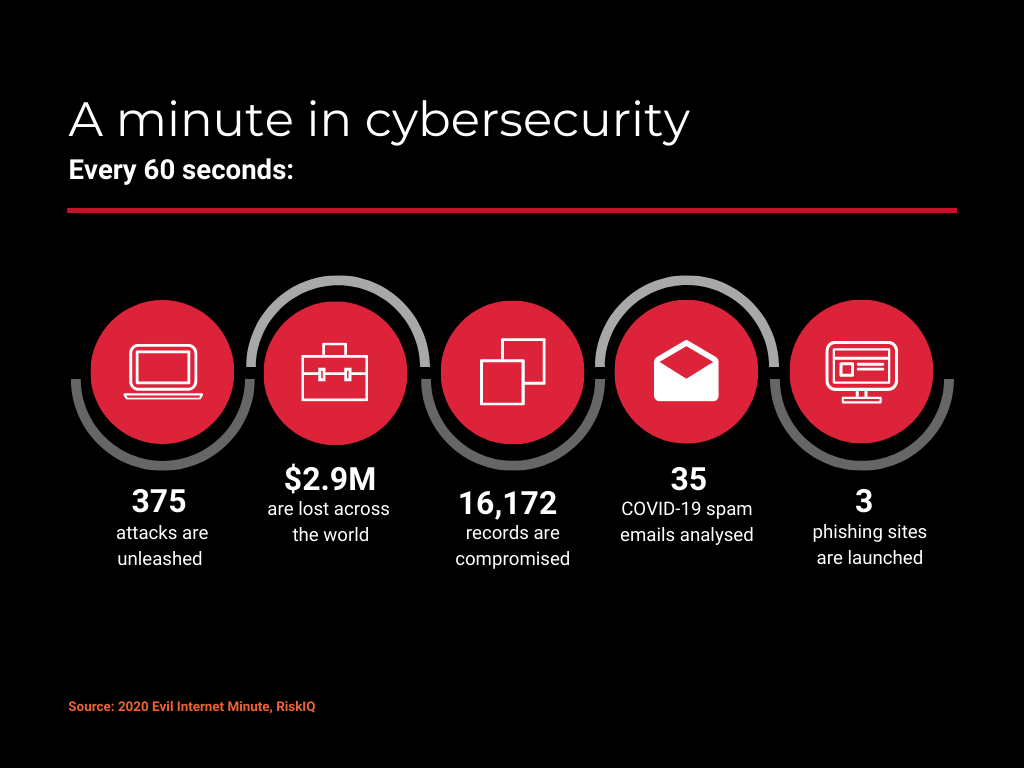
    Firstly, every 60 seconds, 375 attacks are unleashed upon the global community, costing the world economy $2.9 million. In other words, every single computer with an internet connection is targeted by malicious agents about 1.5 times per minute. A whooping 16,172 records are compromised.[1] Certainly not a promising picture if you are a business leader or oversee a company’s cybersecurity for a living.

    As we celebrate cybersecurity awareness month to promote greater security and cyber hygiene, we would do well to keep in mind that every day should be cybersecurity awareness month. Therefore, we can all benefit from a deeper understanding of today’s most common threats and what we can do to protect our business systems from them.

    Cybersecurity in 2020: the impact of the pandemic

    The already complex world of enterprise security got further intricate with the advent of COVID-19. Also, the sudden shift to remote work has pushed company networks to the limit, opening a myriad of new potential points of entry for attackers to exploit. Additionally, the ensuing fear and confusion have given more leverage to attackers looking to deceive individual employees as a means to gain company-wide access. As they say: you are as strong as your weakest link. And hackers love that.

    Cybsersecurity in 2020: the impact of the pandemic

    Social engineering, the act of tricking someone by using their natural tendencies and emotional reactions, has acquired a whole new dimension of sophistication and finesse. Phishing emails disguised as governmental safety announcements, fake HR memos encouraging you to get acquainted with the office’s new cafeteria policy. And that is just the start two per cent of all COVID-related websites created in recent months contain malicious code. A seemingly small number until you realise there are billions of COVID-19 pages out there.[2]

    Remote work is here to stay, and so are the advanced techniques that cybercriminals use. In fact, they will only get more refined in the months to come.    

    A growing variety of cyber threats – Cybersecurity in 2020

    In addition to the rising complexity of attacks, the sheer variety of techniques hackers use is a top concern for companies and cybersec professionals who are struggling to catch up with an ever-growing catalogue of threats. New forms of mobile malware alone, for instance, have grown 12% compared to last year. PowerShell-based malware, which leverages the Microsoft task automation and configuration management framework to carry out attacks without leaving any traces, grew by 1,902% over the same time period.[3]  

    Also discover our article & interview: Leadership Failure: The Real Human Element Behind Cyber Attacks

    Targeting the cloud

    Cloud has become the backbone of the modern enterprise, and hackers are targeting it accordingly. The rise in attacks is being particularly felt in those industries which depend the most on the cloud for productivity. For example, threats aimed at the transportation and logistics sector increased by 1,350% in the first quarter of the year. Education experienced a 1,114% rise in attacks, with governmental organisations, manufacturing and financial services following behind.[4]    

    The Top 10 Belgian Cloud Pros to Follow on Twitter

    Most attacks are opportunistic in nature and involve the “spraying” of cloud accounts with stolen access credentials. The majority of access attempts came from either China, Iran or Russia. [5] 

    Ransomware-as-a-service

    While phishing and trojans are still behind most cyber attacks, ransomware continues to surge and is perhaps the most feared malware of them all. Its capacity to cripple an entire company’s operations in a matter of minutes, together with how difficult it can be to prevent these attacks in the first place, surely keeps many security specialists and IT managers awake at night. Also, threat actors are becoming increasingly sophisticated.

    What started as attacks
    by individual hackers or small rogue groups has now evolved into full-fledged
    criminal organisations that operate under a ransomware-as-a-service approach.
    Some even have “customer service” helplines to guide victims through the
    process of paying the ransom.

    These hacker groups have greatly benefited from COVID-19, taking advantage of the increase in cloud usage and telework. Half of the world’s organisations were hit by ransomware last year, with most successful ransomware attacks involving public cloud data. Data was successfully encrypted in 73% of attacks.[6]

    Additionally, attackers
    are finding more and more weaknesses to exploit as remote workers and IT
    engineers increasingly use Remote Desktop Protocol (RDP) to access internal
    resources. The higher use of personal devices has also complicated the problem
    of shadow IT, multiplying the potential points of access and making it more
    challenging for security professionals to safeguard company networks.

    ? Subscribe to our podcast

    Join our community and find your next job or expert in IT

    [1] The 2020 Evil Internet Minute, RiskIQ, Inc. (2020)
    [2] 2020 Threat Report, Webroot (2020)
    [3] The McAfee Labs COVID-19 Threats Report, McAfee (2020)
    [4] McAfee Labs COVID-19 Threats Report, McAfee (2020)
    [5] McAfee Labs COVID-19 Threats Report, McAfee (2020)
    [6] The State of Ransomware 2020, Sophos (2020)
  • Weekly News: The Two-Faced Approach to Regulating Big Tech

    Weekly News: The Two-Faced Approach to Regulating Big Tech

    The Two-Faced Approach to Regulating Big Tech; why ransomware attacks keep on happening ; and how VR could change real estate.

    The Two-Faced Approach to Regulating Big Tech

    Regulating Big Tech. Big The popular Chinese short-form video app TikTok has been making headlines since its origins back in 2018. The reasons behind its quick ascend to fame are a no-brainer. 

    TikTok lets anyone produce and edit videos effortlessly, and is
    powered by an incredibly effective recommendations algorithm that makes
    scrolling down its feed highly addictive. 

    The platform has also become a meeting place for younger
    generations that had so far eluded traditional social media outlets like
    Twitter and Facebook. And brands love that.

    Given its huge monetization potential, then, it’s no surprise
    that TikTok’s has also attracted the attention of powerful interests. For good
    and for ill.

    After threatening to ban the app under suspicions of Chinese-sponsored espionage, the U.S. government –and Trump– had a new message: 

    It’s okay as long as Microsoft buys TikTok’s U.S. business before mid-September. Oh, and the government should get a cut of the benefits. 

    Only that now it appears that Microsoft might want to buy TikTok’s entire global business.

    The new episode of this serialised drama comes just a week after Big Tech leaders appeared before U.S. Congress to defend themselves against accusations of monopoly and unfair competition. Now one big tech company might get even larger.    

    Whatever it takes to win a trade war and fatten the national coffers.

    And that’s why ransomware attacks keep on happening

    This past month has
    been a busy one for cybersecurity. 

    First Twitter got hacked by what turned out to be an
    amateur group of teenagers.
    Then the
    smartwatch maker Garmin was knocked out by a ransomware attack that kept its
    services down for days. 

    Well, new information emerged this week suggesting that Garmin
    paid a multi-million dollar ransom
    in
    exchange for a decryption key to recover its files. 

    Garmin would have supposedly made the payment through an
    intermediary, Arete IR, which provides ransomware negotiation services. 

    A great ending for EvilCorp, the Russian hacking organisation
    thought to be behind the attack. Or maybe not? 

    In fact, Arete IR claims that WastedLocker, the ransomware
    strain used in this occasion, is not consistent with the Russian group’s modus
    operandi. Another player might be responsible.

    Whoever is the real culprit,  the fact that a large multinational company like Garmin has opted to pay the ransom sets a dangerous precedent in the fight against cybercrime. 

    No wonder these attacks keep on happening.

    Also read our Weekly News: A Ransomware Attack, Self-Taught Robots and Online Abuse: The Week in Tech News

    How VR could change real estate

    Taking a virtual
    reality tour of a new apartment or office is nothing new. The technology has
    existed for some time now. They were simply not that many incentives to make it
    a widespread thing. 

    With the pandemic, however, shopping for a home without leaving
    the sofa has acquired more of an appeal. Especially considering that lockdown
    has left many hungry for a change of scenery. 

    Too much time trapped in between four walls tends to make you
    want to at least change those for walls. 

    Although, as the BBC shows in an article published this week,
    the number of apartment offerings that incorporate a VR tour option remains
    marginal, things are quickly picking up pace.

    The property listing company Zoopla says the coronavirus crisis
    has tripled the number of virtual viewings for new properties. 

    This goes in line with developers and the broader real estate industry, which for years now have been allocating a part of the construction budget of new buildings to developing a VR experience. 

    There’s only one big caveat: visiting an apartment in this manner requires you to have a VR headset at home, and they are expensive. At least for now.

    ? Subscribe to our podcast

    Check out more of our interviews from our podcast episodes.

    Join our community and find your next job or expert in IT

  • Weekly News: Tracking Down the Untrackable

    Weekly News: Tracking Down the Untrackable

    Tracking down the untrackable; News Windows virtual desktop features,; How old is an old dev; Confronting the new data reality… Discover the weekly Tech & IT news.

    Tracking Down the Untrackable

    What can be worse than
    crushing your personal record and not being able to brag about it to your
    friends online? 

    Well, how about, for example, a ransomware attack.

    If you are a fitness lover or know someone who fits into this
    category, chances are you have already heard about the Garmin hack. 

    The American GPS and smartwatch maker was down for almost three days, its data and services held hostage for a ransom of $10m. As a result, users were unable to sync their devices with Garmin’s ecosystem of apps. 

    Evil Corp, a Russian hacking group behind a recent string of attacks on U.S. companies, is thought to be responsible for the incident.

    Discover our interview: A Career in Data Science: Unlocking The Power of Data with AI

    New Windows Virtual Desktop features

    With the current pandemic, being able to
    deliver a secure Windows 10 desktop experience to remote workers has become a
    must for many companies. 

    First
    introduced under public preview, the Virtual Desktop updates are now
    generally available

    The new,
    now-polished features include:

    • Azure portal integration and role-based access control (RBAC)
    • Scalable user management via the Azure Active Directory (Azure AD)
    • Monitoring logs now stored in Azure, for quicker troubleshooting and analysis
    • A/V redirect for Microsoft Teams

    New Windows Virtual Desktop features

    How old is an old dev?

    Unfortunately, age discrimination remains an
    issue in most industries and professions. 

    Whereas
    experience was once unanimously revered and treasured, our fast-paced society
    often tends to see older professionals as necessarily outdated. Rather than
    being the exception, IT is one of those areas in which the gap is even
    wider. 

    In a short paper published earlier this year, software engineering students went through popular online articles and related discussions on Hacker News to analyze how the media portrays the employability of older developers. 

    “Too old to be a developer” seems to be a common theme.

    Discover our interview: How To Code Well: Taking Breaks and Other Pieces of Timeless Career Advice

    How old is an old dev?

    Confronting the new data reality

    European data
    watchdogs aren’t wasting any time. 

    Shortly after the European Court of Justice stroke down the Private Shield dataflow agreement between the U.S. and the E.U., the European Data Protection Board warned there will be no regulatory grace period.  

    Companies relying on the cross-Atlantic flow of data to conduct operations and sell products and services will have to adapt; and fast.

    Confronting the new data reality

    ? Subscribe to our podcast

    Join our community and find your next job or expert in IT