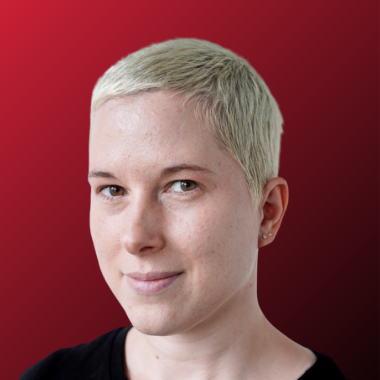
Interview with Denise Nepraunig, a Berlin-based iOS developer who decided to pursue her passion for Apple after 13 years in the SAP ecosystem. She’s now a Swift and iOS dev at CARIAD, the Volkswagen Group’s automotive software development division. This is what she did, why she did it, and how you can do it too.
Interview with Denise Nepraunig
You worked with SAP for many years. Why the change in
career focus?
I started out within the SAP ecosystem about 13 years ago, working for an SAP customer, then I had a short stop at an SAP consultancy and, finally, I ended up at SAP itself. The thing was that SAP is really great to work with, and it also pays very well to have SAP skills. But they are really specialised, so it can be hard to transfer them to another company or environment. It’s also hard in terms of resources. Then. things like blog posts or stack overflow questions, they are hard to get by.
Plus, after doing SAP stuff for so long, I really wanted to break free from all of it and diversify my skillset so that I could work anywhere. The last two or three years at the company, I had the chance to get started with some iOS development, and I found it really exciting, I loved it.
So, I’m an Apple fangirl, and I thought writing your own apps for the platform was really cool. Swift makes it a lot easier than Objective-C, with which I had failed in the past. But at SAP we were still using our own frameworks within iOS and stuff like that, so I felt a bit stuck inside this ecosystem.
Then I had the opportunity to interview at Volkswagen, and I saw that they hadn’t created too much stuff for iOS yet. And It was a really good opportunity for me. I joined last December, so I’m a few months in. To be honest, it was quite scary to leave my extensive SAP experience and network behind, but so far I don’t regret it a single bit.
Now I am working on apps with which you can remotely control car features
like climatization. It’s also really fascinating to have hardware involved. At
SAP you just controlled software or business processes and now you can control a
car. It’s like being a kid with a remote-controlled car, but with a real car
instead.
So, you basically went from writing code for B2B
applications to doing it in the B2C space? What are the biggest differences you
have noticed?
For one thing, and in my case, you’re much more closely connected to the
customer, and your sprint and your tasks inside the sprint can change very
quickly depending on what problems arise or the feedback on the App Store.
Also, I feel more connected to my work. You directly know the end-users, everybody in your everyday life has experience with cars, but hardly anyone else has experience with ERP systems. Volkswagen also has a lot more customers. It has a whole different scale than SAP. Some projects I worked on, yeah – it’s really exciting. I was looking exactly for this.
What’s the best career advice you have ever been
given?
The best piece of advice has definitely been that I should network a lot.
And that was really important when joining a
big company like SAP. There are just so many different things which you are
dependent on, whether it is a cloud platform, or a web framework, or stuff
inside SAP itself… You need to know people, and it helps tremendously if you
know the right person. And that’s also true in terms of careers. For example, if
you know someone in another department, you can easily get a job there just
because you know the person.
There are also some cool events
that SAP had, where I got the chance to be a speaker at and so on. So this was
a tremendous experience inside the SAP family. My first manager at SAP actively
supported me in this process, encouraging me to travel to conferences and speak
there. I had the opportunity to travel to different countries and experience different
cultures.
What’s the
biggest challenge you have faced in your career?
Before I was in the IT
business, I was a secretary. I had no formal IT education and was coding as a
hobby. I used automation in Microsoft Excel a lot and very basic stuff like
that, and it made me decide I wanted to be a developer.
But trying to get the
right education and my first job without having any experience was very, very hard.
It was the biggest challenge, and overcoming it involved a bit of luck too. I heard
about a job from a former university professor of mine. It was SAP-related, but
not in development. I was first a project assistant and then kind of worked my
way up to developer. I knew I had to do other stuff to end up where I wanted. I
had also studied communications engineering, so I had all those skills in my CV
already. But work experience is so important in this field, and getting the
first job was super hard.
Is that
something you would recommend to newcomers who are struggling to get into the
field, starting with something related and moving up?
Yeah, I think so. You can
do this in a big company in particular, but also in small companies. There one
wears many hats, and it’s also easier to look over the shoulder of other people,
because it’s smaller. I think that, if you can’t directly get a developer job,
try to sneak in through somewhere and work your way up.
Hos was your particular
experience in larger companies?
Well, for me, my
developer career really took off in terms of knowledge when I joined SAP. Before,
I worked in teams that were rather small. There were one or two developers who
most of the time did a plethora of things. So, I was writing code, but I did
not feel that I was able to get better at it. I wrote the same things, again
and again.
But, when you join SAP, there are eight people working on the same problem all together. And a lot of people are smarter than you, obviously. It was the first time I ever heard about unit tests and other things I now take for granted. You don’t do this on your own if you’ve never been exposed to it. So that was tremendously helpful. And, also, in a big company, if something else interests you, it’s easier to move to another department instead of looking for a whole new job entirely. It was really a great experience. I mean, big companies sometimes move slowly and can be frustrating when it comes to some processes, but you learn a lot.
Check out more of our interviews from our podcast episodes.
Follow Denise Nepraunig on Twitter, LinkedIn and through her website.
Also discover ou special guide: The Ultimate S/4HANA Careers Guide