Blog

  • The Microsoft Technology Stack for Business

    The Microsoft Technology Stack for Business

    When it comes to enterprise technology, the Microsoft Technology Stack reaches almost as far as the eye can see. From operating systems and development tools to cloud computing, the company owns an extremely diversified portfolio of solutions that can be hard to keep track of as an IT professional.

    Don’t get lost in the clutter. These are the principal platforms that make up the Microsoft Technology Stack.

    .NET

    An open-source,
    cross-platform development framework used to build all sorts of applications.
    .NET, allows developers to choose among a wide variety of programming
    languages, code editors and libraries, giving users the flexibility and
    scalability to build solutions for everything from web and mobile to IoT.

    It is these broad
    capabilities that make .NET one of the world’s most popular developer
    platforms. As such, it benefits from the support of a vast community and an
    extensive repository of libraries.

    GitHub

    GitHub has been part
    of Microsoft since the company acquired it in 2018. The platform is used by
    both amateur and expert developers to host code, review it and collaborate by
    focusing on version control and following a continuous integration, continuous
    delivery (CI/CD) philosophy. 

    Its impressive
    community is what really fuels GitHub. Millions of programmers upload their
    work and review each other’s code through the platform. As such, GitHub is one
    of the world’s largest open-access repositories and collaborative projects
    platforms.

    Furthermore, the fact
    that is used by hobbyists, corporations and top professionals alike has turned
    GitHub into a sort of LinkedIn for developers and tech enthusiasts. A place to
    showcase one’s talent and concrete achievements.

    Microsoft 365

    Microsoft 365 is one
    of today’s leading cloud-based productivity platforms. It combines the
    traditional MS Office suite with a set of collaboration tools and features like
    cloud-based storage and Teams to provide organizations and individuals with the
    means to get things done wherever they are located.

    It is a mix of software like Microsoft Teams, Word, Excel, and PowerPoint, with flexible and scalable cloud storage and security and world-class security. From an IT perspective, it requires companies to deploy, maintain and update an infrastructure that is adapted to business needs while preserving security and a nimble spirit.

    Microsoft Careers

    Dynamics 365

    Customer Relationship Management (CRM) systems are all-encompassing software toolsets with capabilities extending across marketing, sales and customer service. As a leading CRM, Dynamics 365 allows organisations to easily plan and execute operations from a single platform. The speed, efficiency and cohesiveness derived from its use have made CRM a staple of today’s business management – as well as one of the most profitable specialisations in the IT world.

    Dynamics 365 is a scalable solution that allows for advanced customization, making it adaptable to the needs of each company. It is the job of technical MS experts to set up, customize and maintain this environment in a way that maximizes efficiency, user satisfaction and customer loyalty.

    Test these upcoming Dynamics 365 features

    Azure

    Microsoft Azure is the
    company’s public cloud computing platform. A competitor to Amazon Web Services
    (AWS), Google Cloud, and IBM Cloud, Azure provides companies with a wide range
    of cloud services, including computing, storage, analytics and networking.

    Azure is an
    open-source-friendly, adaptable and scalable platform that fits the needs of
    every customer. Furthermore, Azure is industry-specific, providing dedicated
    tools to sectors like healthcare, e-commerce or retail. It offers 4 different
    types of cloud computing: infrastructure as a service (IaaS), platform as a
    service (PaaS), software as a service (SaaS) and serverless.

    A whole army of professionals is needed to design, deploy and maintain such cloud ecosystems.

    On Learning Azure IoT and Being an Active Member of the Community

    Microsoft Power
    Platform

    The Microsoft Power
    Platform enables businesses to create and deploy custom-made workflow apps and
    reports that help them easily extract, process, and analyse data. The Power
    Platform is integrated with the rest of Microsoft’s ecosystem of platforms as
    well as with other third-party apps.

    It is a key tool in
    today’s data-driven business world, providing actionable insights in real time.
    It requires a team of technical experts to deploy, maintain and expand, as well
    as to train end-users and offer them support on a daily basis.

    Microsoft SQL
    Server

    SQL Server is a relational database management system (RDBMS) by Microsoft. Also called MSSQL, it serves as the backbone to data registering, accessing and manipulation for its enterprise customers.

    It is protected by high-grade encryption and caters to a variety of businesses depending on size and data needs.

    Learn more about the QlikView Developer Job

    Visual Studio

    Microsoft Visual
    Studio is an Integrated Development Environment (IDE) that can be used to build
    anything from the ground up. In a way, IDEs are the word processors of the
    programming world, allowing developers to create applications for a multitude
    of platforms from a single place.

    Visual Studio includes debugging, automation and
    team collaboration features, creating a holistic environment to conceive and
    deliver high-quality applications.

    Learn more about the Microsoft Technology Stack and the various roles within Microsoft Technologies in our comprehensive Microsoft Technologies Careers Guide

    Sign up to to Mission Contol Center Newsletter

  • Weekly News: A crypto-worm is stealing AWS credentials

    Weekly News: A crypto-worm is stealing AWS credentials

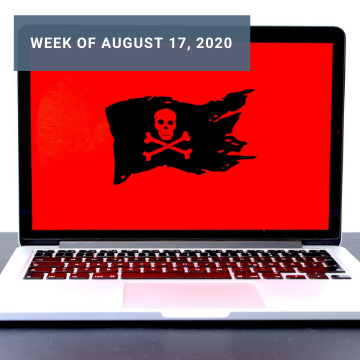
    Researchers have
    discovered what they believe to be the first-ever crypto-mining worm that also
    manages to steal AWS credentials. 

    Crypto-mining worms have been around for a while, stealthily
    infiltrating a network and using its computing power to mine cryptocurrency.
    This new worm is actually not even that good at it, having only made a mere
    $300 in profits. 

    However, the attackers, who go by the name TeamTNT, have managed to incorporate the credential-stealing feature into their code. The researchers believe the attackers have recycled this functionality from a previous worm that targetted Alibaba’s cloud. 

    This points to an emerging trend of copy-and-paste, opening the door for future malware to replicate TeamTNT’s code and go onto steal AWS credentials and compromise cloud ecosystems.

    Fired for skipping the firewall

    A whopping four out of
    ten businesses in the UK admit having dismissed employees for breaching the
    company’s security protocols. That’s according to a new survey by Centrify, a
    privileged access management solutions provider.

    Most incidents were related to work-from-home scenarios, as a
    large proportion of employees tends to circumvent safety measures in favour of
    comfort or portability. 

    As a result, 65% of companies have made important changes to their cybersecurity policy. Shadow IT was already a huge problem before the workforce transitioned to remote work. Now it’s become even more difficult to ensure that employees don’t use personal devices to access company networks and files.

    Well, just keep in mind that you could get fired for it.

  • Remote Hiring is Here to Stay: a Fresh Take on IT Recruitment

    Remote Hiring is Here to Stay: a Fresh Take on IT Recruitment

    Any activity that could afford it went remote with the arrival of Covid-19. Now, as the months ahead remain uncertain and companies discover that is possible to operate remotely, the exception has become the norm. A recent Gartner survey confirmed the writing on the wall: a sweeping 82% of business leaders are planning on allowing at least some level of remote work moving forward, even after the pandemic is over. Yet despite being the other side of the employment coin, recruiting has not received that much attention thus far. In fact, remote hiring has become as much of a necessity and a reality and, just like telework, it comes with its own set of challenges and peculiarities.

    Remote hiring & the new recruitment landscape

    Gone are the days of overcrowded career
    fairs full of eager master’s students elbowing each other to get a minute with
    a representative of one of the top companies present. So are the endless rounds
    of in-person interviews that have candidates repeatedly come into the employer’s
    offices and meet half the team.

    From now on, businesses will conduct fewer
    and more focused interviews, mostly online. Only the more critical and senior
    positions will get greater face-to-face time, with the rest of candidates being
    interviewed remotely except for perhaps the last interview, which is often just
    used to meet the chosen candidate and establish a more personal connection —
    something rather important in the colder remote work environment. In the case
    of IT contractors and temporal employees, however, the selection process is
    most likely to move completely online as flexibility and speed can be more of a
    priority.        

    Career fairs and other networking events will also move online or even disappear completely, in favour of a new model that can accommodate safety measures while allowing for talent attraction. Eliminating the physical barriers of traditional career fairs will, in turn, expand the pool of candidates available to companies and democratize access to the top positions. Companies will be able to seek the best candidates regardless of location, while candidates will get to apply to positions that otherwise would have been completely out of reach.

    A new series of challenges for employers with remote hiring

    But moving the hiring process online will
    create new problems while solving existing ones. Assessing a candidate’s fit
    for the position and the company is more challenging when done through a
    computer screen. And there is a lot to assess in today’s candidates.

    Hunting for the most in-demand technical IT skills was already tricky before the pandemic. Especially for the more niche skill areas, HR managers and recruiters who did not have that deep a technical expertise often had troubles assessing the technical skills of IT candidates.  

    On top of that, the current crisis has created a need for IT professionals to possess a series of more business-focused skills. From change management and compliance to business intelligence, recruiters now have one more checklist to worry about when evaluating candidates.  

    Additionally, the unique conditions of remote work make soft skills more important than ever. Softer skills like creativity and entrepreneurship were already becoming a must-have for IT experts. Now, interpersonal and communication skills are key to ensuring efficient teamwork dynamics and workflows. So is cultural fit. Employees need to be proactive in reaching to colleagues, making their work more visible and being open about their needs. Unfortunately, soft skills are some of the hardest qualities to assess when not face-to-face.  

    Looking ahead

    Both the new recruitment environment and the difficulties it brings along are forcing companies and hiring managers to come up with new best practices and processes in order to attract and retain the best candidates.

    Ideally, the new approach combines a better and more targeted online interview model, with personal know-how and the use of the latest technological tools. For example, AI can help recruiters identify candidates who match the job’s criteria and are a

    ? Subscribe to the podcast

    Join our community and find your next job or expert in IT

  • HR Managers: How to Assess the Technical Skills of IT Candidates

    HR Managers: How to Assess the Technical Skills of IT Candidates

    Undoubtedly, it can be difficult for hiring companies to assess the technical skills of highly specialized IT candidates. Especially when recruitment duties fall more heavily on the HR or Purchasing functions rather than on the more tech-savvy IT managers. 

    That is even if you consider yourself to be an industry insider who knows all the ins and out of your company’s market. As a hiring specialist, you probably do not have the level of detail needed to assess a candidate’s skill in any of the technical areas of expertise currently most in demand.  

    But that does not mean you are helpless. Not at all. Here is a series of steps that will help you identify top tech performers regardless of their specialty.

    Need advice on how to start or develop your freelance consulting business in tech or IT? Need to start a new permanent or freelance assignment? Join Mindquest and get support from our team of experts.

    Assess the Technical Skills of IT Candidates

    Start with the CV

    The first step in the process of recruiting any candidate is CV analysis. Beyond providing an overall idea of a candidate’s profile and trajectory, a careful look at a CV also offers an opportunity to start filtering early on and be more efficient.

    Tips on indicators to look for

    Look at these
    indicators to get a first impression of an expert’s technical skills:

    • Real-world experience: someone who has worked on actual AWS migration projects, as opposed to someone with just an educational background, will have a deeper knowledge of this technology stack and related AWS tools (CodeDeploy, CodeBuild, CodePipeline…)
    • The level of that experience. Of course, a consultant with 25 years of experience and major projects on their back will be more skilled than a more junior profile
    • Specific training and certifications on given technologies. Yes. Education is still important. Not as a substitute of experience, but as a complement that demonstrates a candidate’s professional and career-oriented attitude and validates the depth of their expertise.  
    • The level of detail with which a candidate lists all skills and technologies. A truly experienced IT professional will have no problem specifying what programming languages, stacks and platforms. They dominate and to what level. Whereas someone with not as much experience will opt for more general and vague terminology.

    Community
    involvement

    Moreover, not all tech and IT professionals get involved with their community and attend events. Being an active member of the community is not a prerequisite for being good at one’s job. But it sure helps.

    If you spot a candidate who attends trade conferences, shares their expertise on forums, or leads workshops on their area of ​​expertise, chances are they are the kind of committed and driven professional you are looking for. Then, positive signs here include having an active GitHub profile, which allows users to share original code and have an open debate a variety of issues.

    Ask the right
    interview questions

    The interview is the next step. Asking the proper questions about the skills covered in the CV and the job offer will allow you to get a more precise idea of ​​the candidate’s level of expertise.
    Do not hesitate to ask for more detail on the candidate’s past experiences, to alternate open-ended questions and very concrete ones, and to propose hypothetical scenarios. Take the time to prepare your questions in advance.

    If your level of
    understanding of the candidate’s area of ​​expertise is very limited, do not
    hesitate to be accompanied by someone who can help you prepare and conduct the
    technical part of the interview.

    For more advice, particularly on how to approach interviews with independent contractors, you can check out our article on the 5 key questions to ask a tech or IT freelancer.

    Put the skills to the
    test

    Nothing beats an old-fashioned test when it comes to demonstrating certain skills. It is very common for companies to have their IT candidates take task-specific practical tests, both to assess their technical capabilities and other parameters such as essential soft skills and cultural fit.

    Again, you can enlist the help of a tech-savvy colleague to design the test and interpreted. It is standard practice to develop a range of tests covering the most common positions, but you will need to do some extra work for areas of expertise that are not so ubiquitous or if the candidate needs to fulfil very specific project specifications. Working with an industry-specialized recruiter can also give you an edge here.  

    Check the
    references

    Last step: checking a candidate’s references. As it is the case with any other position, this process takes time but is essential to avoid mistakes. Especially when you do not know too much about the skills you are vetting.

    Compare the answers that the candidate provided during the interview to what former employers have to say. Ask these employers about the depth of the candidate’s knowledge, as well as their role within the project and overall performance. Here you also have a chance to corroborate your first impressions of the candidates cultural fit and their soft skills.

    Find your next assignment on our freelance and permanent IT recruitment platform, or join Mindquest so you don’t miss out on any job opportunity!

  • Weekly News: Your Phone is an Earthquake Detector

    Weekly News: Your Phone is an Earthquake Detector

    If you are one of the 2.5 billion Android device users out there, you now have a brand new conversation topic. Soon your phone will be part of a worldwide earthquake detection network. Yes, your phone is an Earthquake Detector soon…

    Also discover our article: Weekly News: Robot Butlers and Virtual Influencers

    Your Phone is an Earthquake Detector

    While using smartphone sensors to build an okay seismometer app
    is nothing new, Google has a better idea: integrating it into the phone’s
    operating system directly. 

    All devices running Android 5.0 and up will get the new feature
    through a Google Play Services update, essentially becoming decentralised
    tremor-monitoring stations that one day will help detect earthquakes early on
    and warn users. 

    For now, Google plans on collecting data for a while to fine-tune
    the system before rolling out proactive alerts. But don’t worry. You can
    opt-out of the service via your phone’s settings. Although most people won’t
    even know it is there.

    Toshiba-bye

    Thirty-five years
    after debuting its first laptop, the Japanese conglomerate Toshiba announced it
    is abandoning the portable PC market. 

    The entire PC hardware market, in fact. In 2018, Toshiba had
    already sold most of its PC business to Sharp, the same buyer this time
    around. 

    The decision comes as the company announced its first quarterly
    losses in 4 years and officially marks the end of an era in laptop
    history. 

    Toshiba laptops reached their heyday in the 1990s, when they came to dominate the global market. They started losing ground in the late 2000s after an industry shift towards more attractive designs and more powerful machines   

    A good reminder of how important it is to adapt and keep innovating.

    ? Subscribe to our podcast

    Join our community and find your next job or expert in IT

  • Strengthening the IT support team: the top back-to-school challenge for CIOs?

    Strengthening the IT support team: the top back-to-school challenge for CIOs?

    Many companies have been hit hard by the Covid-19 epidemic. Disruption was inescapable, from decline and suspension of activity to forced restructuring of teams and processes. IT teams were among the most impacted by these upheavals, as IT decision-makers had to take on a new role to help their organizations navigate the crisis. Therefore their new mantra: adapt, anticipate, and reassure internally. Is then strengthening the IT support team the top back-to-school challenge for CIOs?

    As we approach the start of the new school year, the challenges for CIOs and other IT managers are increasing. Like who awaits impending doom, they are faced with the threat of a new lockdown at any minute. Adapting to a new way of working and conducting business won’t be easy either.

    It is now more strategic than ever to strengthen their IT support team, guaranteeing operational continuity and completing the digital and organizational transformation of the company. Yet budget and organisational constraint make this a challenging endeavour.

    Strengthening the IT support – A front-line service

    IT support has always been a vital service
    within the company. Operating as an internal customer service, it helps solve end-user
    problems, responds to all their requests related to the work environment, and
    improves productivity.

    In just months, the pandemic has
    strengthened the role of IT within organizations and propelled the IT service
    to the front line. While some companies had to completely shut down activity
    during lockdown, many were able to remain active thanks to telework.

    But managing such a sudden and massive transition has required significant technical and organizational adaptation. Setting up collaboration tools, remote troubleshooting and technical assistance, rapid resolution of incidents, training of employees regarding cybersecurity risks… IT support teams had to put in long hours to ensure the proper functioning of remote work.

    Moreover, to complicate things, cybercrime has skyrocketed since the start of the pandemic and continues to rise.  Hackers are taking advantage of the human and organizational weaknesses of companies, targeting remote access points and employee email. Finding the right security experts has become a big challenge for businesses in recent months.

    In short, IT support teams have made
    themselves more essential than ever.

    Facing new challenges

    The challenges related to the Covid-19
    crisis add to a multitude of already existing challenges within IT support
    teams. Issues such as cost reduction, process optimization and quality of
    service have only acquired more importance.

    The notion of the internal customer is
    leading many companies to redefine their structure and put the user at the
    heart of the process to improve employee experience. This perspective, which
    brings benefits like satisfaction and fluidity, often requires support teams to
    unify points of contact, collect feedback and proactively participate in
    improving the image of the overall IT department.

    Another challenge: reducing tasks with low
    added value and exploiting technologies such as AI to automate as many
    operations as possible. The idea here is to allow support teams to focus on
    more strategic tasks like provide guidance to users.

    IT support managers have also one more major new challenge: communication. They need to be transparent and reassuring with their team and play an important role in raising employee awareness about increased security threats.

    Set up an adapted Talent Strategy for strengthening the IT support team

    To have a good IT support, you need to
    start by having a suitable team. Having the right people in place is an
    essential condition for success, as it is often the skills and motivation that
    make the difference between an efficient support service and an insufficient one.

    But how do you make sure you have a strong
    team? You can start by following these few tips:

    • Perform an audit of current
      skills within your support teams: look at what skills are missing, see if key
      skills are concentrated in too few employees, etc.
    • Adapt your team’s organization
      to be able to call on the right people at the right time: in an emergency, you need
      to be ready to activate a reorganization plan to mobilize key skills
    • Identify the most efficient
      resources and secure your existing talent
    • Set up training mechanisms to
      re-skill certain employees whose area of ​​expertise is no longer suited to the
      current situation
    • Establish a recruitment plan to
      cover the missing skills and be able to quickly find the right candidates when
      needed
    • Focus on communication and
      transparency

    Strengthening the IT support : Is calling on external resources an effective strategy for your IT support?

    On top of operational challenges, the
    current economic crisis is having a heavy impact on corporate budgets. Many
    organizations have had to drastically cut down their expenses, especially their
    IT costs.

    So how, as an IT decision-maker, can you strengthen your support teams without taking significant budgetary risks? Outsourcing or calling on IT freelancers can be a winning strategy in this time of crisis.

    In addition to fewer administrative constraints and the positive effects that freelancers can have on your internal teams, the recruitment of an independent consultant can allow you to mobilize very specific skills to accelerate projects or resolve incidents in key business areas.

    The flexibility of working with contractors
    allows you to limit risks during this unstable period, as well as access highly
    coveted expertise such as cloud and certain collaborative tools.

    Regardless, the start of the school year promises to be pretty intense. Whether you choose to strengthen your support teams through hiring or by occasionally calling on external staff, do not neglect the importance of having a strong support team to face the coming months with confidence.

    Join our community and find your next job or expert in IT

  • Nadia – Chapter III

    Nadia – Chapter III

    Follow the story of Nadia, a quantum security expert in 2050 London

    Nadia, a story by Miquel Morales.

    Jumping in now? Catch up with previous chapters.

    Chapter III

    Finding the Blue Dragon
    hadn’t been precisely easy. It turns out speakeasies, those hidden bars that
    had been so popular at the beginning of the century, were back in fashion. Exclusive
    cocktail lounges, disguised as laundromats or hidden in the basement of a
    regular restaurant. Secret meeting places for those who like to feel special
    and mingle with the ‘different’ people. Although you can’t really call them
    secret when they are all listed online. But this one wasn’t.

    Nadia had wandered around
    the apartment building at 4 Chance St for quite some time before finally finding
    the right door. She had mistakenly knocked on at least four flats, their
    inhabitants greeting her with caution before closing the door again. At the fifth
    doorbell she rang, a nice old lady with an evident passion for spying on her
    neighbours had pointed Nadia the way.

    “I believe you want to go
    to the end of that hallway, my dear. Third door on the left. People have been
    up and down making a fuss all afternoon. Odd-looking bunch, if you ask me.”  

    Nadia was now sited on an
    expensive leather couch, sipping on some unpronounceable drink that tasted like
    mouldy oranges and leftover coke. Tom hadn’t arrived yet. Thought real leather
    had been banned years ago.
    A self-described staunch defender of animal
    rights, Nadia decided she couldn’t afford to enjoy that blood-stained comfort any
    longer and headed for the bar.

    The place didn’t look
    like a cocktail lounge. The layout was all off, as if was someone had squeezed
    a bar and a few tables into a regular apartment. The walls were covered in red,
    velvet-like material, with dark curtains separating the main hall from the
    smaller private rooms. At the front door, the security guard who had taken Nadia’s
    invite card was welcoming a young couple in fancy attires. Here and there,
    small groups of people engaged in quiet conversation. Their soft chatter made
    for a good accompanying tune to the synthetic jazz playing through the
    speakers.      

    “There you are!” Nadia jumped
    up startled as Tom’s arm hugged her from behind.  “See, love. I told you she’d come.”

    Tom’s breath smelled of
    alcohol and smoke. Clearly, he had had a head start. His boyfriend Hao was standing
    behind him with an apologetic grin. He seemed colder than usual.  

    “I thought you prided
    yourself in never being late,” said Nadia while poking Tom’s arm with one of
    those tiny cocktail umbrellas.

    “And I wasn’t!” responded
    Tom triumphantly as he signalled the bartender to bring another round for
    three. “We were closing a deal in one of the backrooms,” he said patting Hao’s
    shoulder. “You didn’t think you’re the only one who knows how to do business,
    right?”

    “Oh, great. Another one
    of your crazy ventures,” said Nadia. “What was the last one, again? A virtual
    bar for AI assistants to go on dates?”     

    “Please: more like a soulmate
    bazar,” corrected her Tom. Nadia spilt her drink as she burst out laughing. “Say
    what you want, girl, but it was a brilliant idea. Why bother wasting time on
    dates when we could simply send our AI assistants to figure it out for us? I
    still don’t get why people weren’t that into it.”  

    “Yeah, quite the mystery,
    huh?” All this talk of AI assistants had taken Nadia’s mind back to EVE. Thankfully
    she had been quiet so far. Hopefully, she would remain like that for the rest
    of the night. “So, these are your friends, Hao?”

    “Oh, no. They already
    left,” he said quietly. Something was off between the two; Tom’s
    uncharacteristic early drunkness and Hao’s unusual gloomy mood. Nadia wondered
    what had happened during their meeting. Somehow she got the impression that Hao
    wasn’t okay with the whole thing.

    “Trust me, Nadia. This
    time it’s something big,” said Tom in a serious tone.

    The bartender arrived with a sumptuous, pyramid-shaped ensemble of fresh fruit and laurel leaves. Three cubic glasses sat at different levels of the pyramid, holding a golden liquid with no observable bubbles. Whatever. Better enjoy before she’s back. They each grabbed a drink and let the night take its course. Things ended up picking up the pace when the music changed to something more upbeat. Hao loosened up a bit and accepted Nadia’s invitation to dance. At least until Tom came back to steal her dancing partner as a knight in shining armour. Jokes and office gossip were exchanged in between several more pyramids. Tom decided to move on from virtual matchmaking and devoted perhaps too many efforts to find a suitable someone for Nadia among the attendees. A fun yet embarrassing pursuit. It wasn’t a bad night.

    The retina-tracing lasers
    of the holovisor cabins were clearly not designed for hungover eyes. Nadia stepped
    out of the egg-shaped enclosure and poured a few eye drops after a long yawn. Unbeknown
    to Nadia, a red alert popped up on the system’s main dashboard.

    “How about a little walk,
    stretch your legs?” suggested EVE.

    “So, you care about me
    all of a sudden?” said Nadia as she exited the RayStar security room and made
    it down the hallway.

    “Oh, Nadia. I have always
    cared about you and your loved ones, tried to keep you all safe.”  

    The security wing was at
    the very top of the building, so at least employees could compensate for the
    long hours inside a holopod with 360 views of the City. A corridor went around
    the whole floor along the window. It took about two minutes to complete a whole
    round. Nadia knew because she had timed it before.

    “I still don’t see what
    you are hoping to get out of this,” said Nadia.   

    “You will soon.”

    Dark clouds were
    gathering beyond the city skyline. A group of tiny people could be seen doing
    yoga in the park across the street. A cargo drone flew by, carrying a debris
    container from the construction site next door.

    “You know I only have
    access to the RayStar servers. The encrypted attachments you are making me…” Nadia
    interrupted herself as she crossed paths with a group of technicians engaged on
    a heated debate. Something about a game?

    “The encrypted
    attachments you are making me hide in my messages to colleagues. Whatever they
    are, they are not going to get you anywhere. Our system is designed in a way
    that all accounts are independent of one another and from the central system
    itself. When I send them a message, they only get a representation, an image of
    the message, not the message itself. Whatever is in the attachment will never
    make it out of my account.”

    “Let me worry about that.”

    Nadia had completed a
    full circle around the building and was back in front of the holovisor room. It
    had taken her longer than usual. She should better get back to work. Plenty to
    do before lunch. Nadia rested her chin on the biometric scan. But the system
    made a beep and marked and error. Weird. Nadia tried again. Access
    restricted
    .

    “Nadia?” said EVE

    “What now…”

    “Thank you.”

    And just like that, EVE’s
    voice disappeared. But someone was still calling her name. Coming down the
    hallway were a couple of security guards. A police officer accompanied them.

    “Nadia? Nadia Zabeen?”     

    “Run,” whispered Ziza’s
    familiar voice.

    To be continued…

    Read the next chapter: Nadia — Chapter IV

    Join the community and find a job

    Need tips on how to find a job in IT? Check out our IT job hunting guide.

  • Weekly News: The Two-Faced Approach to Regulating Big Tech

    Weekly News: The Two-Faced Approach to Regulating Big Tech

    The Two-Faced Approach to Regulating Big Tech; why ransomware attacks keep on happening ; and how VR could change real estate.

    The Two-Faced Approach to Regulating Big Tech

    Regulating Big Tech. Big The popular Chinese short-form video app TikTok has been making headlines since its origins back in 2018. The reasons behind its quick ascend to fame are a no-brainer. 

    TikTok lets anyone produce and edit videos effortlessly, and is
    powered by an incredibly effective recommendations algorithm that makes
    scrolling down its feed highly addictive. 

    The platform has also become a meeting place for younger
    generations that had so far eluded traditional social media outlets like
    Twitter and Facebook. And brands love that.

    Given its huge monetization potential, then, it’s no surprise
    that TikTok’s has also attracted the attention of powerful interests. For good
    and for ill.

    After threatening to ban the app under suspicions of Chinese-sponsored espionage, the U.S. government –and Trump– had a new message: 

    It’s okay as long as Microsoft buys TikTok’s U.S. business before mid-September. Oh, and the government should get a cut of the benefits. 

    Only that now it appears that Microsoft might want to buy TikTok’s entire global business.

    The new episode of this serialised drama comes just a week after Big Tech leaders appeared before U.S. Congress to defend themselves against accusations of monopoly and unfair competition. Now one big tech company might get even larger.    

    Whatever it takes to win a trade war and fatten the national coffers.

    And that’s why ransomware attacks keep on happening

    This past month has
    been a busy one for cybersecurity. 

    First Twitter got hacked by what turned out to be an
    amateur group of teenagers.
    Then the
    smartwatch maker Garmin was knocked out by a ransomware attack that kept its
    services down for days. 

    Well, new information emerged this week suggesting that Garmin
    paid a multi-million dollar ransom
    in
    exchange for a decryption key to recover its files. 

    Garmin would have supposedly made the payment through an
    intermediary, Arete IR, which provides ransomware negotiation services. 

    A great ending for EvilCorp, the Russian hacking organisation
    thought to be behind the attack. Or maybe not? 

    In fact, Arete IR claims that WastedLocker, the ransomware
    strain used in this occasion, is not consistent with the Russian group’s modus
    operandi. Another player might be responsible.

    Whoever is the real culprit,  the fact that a large multinational company like Garmin has opted to pay the ransom sets a dangerous precedent in the fight against cybercrime. 

    No wonder these attacks keep on happening.

    Also read our Weekly News: A Ransomware Attack, Self-Taught Robots and Online Abuse: The Week in Tech News

    How VR could change real estate

    Taking a virtual
    reality tour of a new apartment or office is nothing new. The technology has
    existed for some time now. They were simply not that many incentives to make it
    a widespread thing. 

    With the pandemic, however, shopping for a home without leaving
    the sofa has acquired more of an appeal. Especially considering that lockdown
    has left many hungry for a change of scenery. 

    Too much time trapped in between four walls tends to make you
    want to at least change those for walls. 

    Although, as the BBC shows in an article published this week,
    the number of apartment offerings that incorporate a VR tour option remains
    marginal, things are quickly picking up pace.

    The property listing company Zoopla says the coronavirus crisis
    has tripled the number of virtual viewings for new properties. 

    This goes in line with developers and the broader real estate industry, which for years now have been allocating a part of the construction budget of new buildings to developing a VR experience. 

    There’s only one big caveat: visiting an apartment in this manner requires you to have a VR headset at home, and they are expensive. At least for now.

    ? Subscribe to our podcast

    Check out more of our interviews from our podcast episodes.

    Join our community and find your next job or expert in IT

  • IT Contractors: How to Manage Your Activity in This Unprecedented Period

    IT Contractors: How to Manage Your Activity in This Unprecedented Period

    The dual health and economic crisis we are going through creates a particularly high level of uncertainty and instability. And it will probably last for a while. How to manage your activity?

    In this unprecedented context, independent consultants may fear a drop in the number of new assignments and income. Here are a few thoughts to help you better understand the situation and come up with a strategy to maintain and develop his activity.

    Also discover our special guide: IT Job Hunting Done Well: A Step-by-Step Guide

    The state of the market

    In this period of relative normality, many wonder what the next few months will look like in terms of economic activity. And it is true: the outlook is worrying. All predictions point at GDPs falling across the world’s biggest economies.

    While not the hardest hit, the IT industry will nonetheless feel the impact of the Covid-19 crisis. Gartner recently published a new report in which it estimates that global CIO spending will fall by 8% in 2020.

    Before the crisis; during the Gartner IT Symposium, October 20, 2019; the same analyst predicted an increase of 3.7% in 2020. Entering now a period of resource management and reassessment, CIOs will suddenly be forced to prioritize critical services.

    IT Pros: How to Work On Remote in the Post-Pandemic World

    As a result, many projects are and will be postponed. This isn’t a complete market shutdown or outright cancellation of projects, but the impact is going to be heavy nonetheless. And there’s no denying the fact that freelancers are often one of the first to be scratched of the budget.

    However, and this is the first reason to remain positive, IT freelancers are also the ones who are called on first when projects restart. (We are already seeing this with the confirmation of many migration projects to SAP S/4HANA). Freelancers offer companies a flexibility that is an obvious advantage in a context where business is unstable and where uncertainty remains.

    We should also take a closer look at the IT sector, since its different sub-segments are not impacted uniformly. In some areas, the role of the IT department has even been reinforced by the crisis and certain skills are in greater demand.

    With the advent of teleworking in particular, IT departments are under heavy pressure to implement dedicated technologies. While overcoming the cybersecurity challenges that go hand in hand with this trend.

    Sign up to to Mission Contol Center Newsletter

    Manage you activity: Tips for adapting in times of crisis

    Several best practices can be recommended to manage your activity in times like these. The choice of industry is the first element that deserves the attention of IT freelancers looking for a job. If this choice was already important before the crisis; now it is even more so as all the sectors of activity do not suffer the same impact.

    It is, therefore, advisable to sectors that are experiencing a strong peak in activity due to the Covid-19 crisis. Such as mass distribution, health or even online entertainment and education.

    The second tip is flexibility. More than ever, the independent consultant needs to adapt to changing situations and be more flexible on certain criteria for choosing an assignment, such as the location or the context of the assignment. It is not about accepting just anything or being underpaid, but simply about punctually and opportunely expanding your usual criteria. For example, it may be wise to position yourself more in the area of TMA (third-party application maintenance) and carry out small assignments rather than embarking on full-fledged projects.

    It is also important to pay special attention to your “self-marketing.” As always, you must know how to sell yourself. This can start by taking stock of your skills and aspirations to properly orient the way of presenting yourself before employers. Being active on social and professional online networks is also something that will help you stand out from the crowd and develop new connections.

    Finally, you have to continue to train and learn, all while cultivating your softer skills. Keep in mind that the ability to adapt in times of crisis and other interpersonal skills can often make the difference between two similar candidate profiles.

    Stay positive

    Focus on the positive. We know that we have entered a difficult and complicated period from an economic point of view. However, as we have seen, there are several things that should keep IT freelancers positive. First of all, the IT sector is largely spared compared to other sectors (tourism, catering, hotel industry, etc.).

    Secondly, the pandemic has strengthened the role of IT departments (setting up teleworking, cybersecurity, etc.), and the current circumstances can encourage companies to resort to hiring more freelancers.

    Join our talent community - Mindquest

    Join our community and find your next job in IT

  • How to Advance Your Career as an IT Freelancer

    How to Advance Your Career as an IT Freelancer

    Freelancing is often spoken of as the future of work. Many people turn to this way of life to gain more autonomy and freedom and be able to focus on the kind of work they enjoy the most. In the world of IT in particular; where the share of freelance workers keeps on growing, the career prospects are very promising. Freelancers are not limited by that many obligations and can develop professionally as they wish. How to advance your career as an IT freelancer?

    When you are an employee in a company, your career development is often planned and monitored by the HR department or by management. When you are a freelancer, you have to put in place a professional development plan by yourself.

    Here are a few tips on how to do that.

    Technology and IT, a rewarding sector for freelancers

    In the digital and technological fields, freelance workers generally have no difficulty finding new assignments, but finding the dream assignment is another story.

    With equal experience, a tech or IT consultant such as a full-stack developer will have less difficulty finding interesting opportunities than a freelancer in the creative arts. The technology sector is a one particularly sought after by companies, with the best organisations competing to attract and retain the best talent out there.

    Top freelancers performers in tech are in high demand, and that is an advantage for anyone who is qualified and passionate about their area of ​​expertise.

    Advance your career as an IT freelancer: specialize to evolve

    The top freelance consultants are usually former junior freelancers who have evolved through countless assignments over the years. The choice of your missions, then, is key in the construction of a solid professional progression.

    Expert profiles, those that are very specialized in a given technology, are very popular with companies. Think carefully and specialize in a skill or technology that is booming right now or will do so in a couple of years. Consultants specializing in cloud, cybersecurity and data science are very popular right now. For example, as companies wage a war for talent to fulfil their digital transformation goals.

    By choosing a promising area of ​​expertise and developing your skills over time, you can achieve a higher average daily rate (ADR). Keeo on re-skilling so that your rate can increase over time. It is about constantly re-evaluating the added value of your work for your clients.

    Evolve by taking on managerial functions

    Another option to progress in your career when you are an IT consultant is to become a manager. Project managers or team leaders tend to access managerial responsibilities. Which often validate their technical or business skills, and allow them to work on larger projects.

    This type of evolution is often considered the golden road to progress when working in IT. Since it allows you to “climb the ladder” in a consistent way. But managerial roles are not suitable for all profiles and are not an end in themselves for many IT freelancers, who prefer to focus on their area of expertise.

    Manage your own skill development in order to advance your career as an IT freelancer

    To develop your career as an IT consultant, you obviously need to gain experience. But don’t neglect training! And that’s not only because technologies keep evolving at a rapid pace. But also because you need to devise a solid methodology to speed up your skill development.

    But that’s not all. Companies are looking for experts with advanced technical skills, but it is also often interpersonal skills that make the difference. Soft skills, such as communication skills, leadership or creativity are more than ever essential to the success of companies’ digital transformation projects.

    Many training courses exist to improve these behavioural skills, including online training. Take advantage of them.

    ? Subscribe to our podcast

    Join our community and find your next job or expert in IT